In my Operations Excellence role, an engineering solution was rarely judged only on whether it worked. A coating process, a production jig or a tooling plan also had to make sense for labour, capacity, quality, lead time and long-term cost. This case study brings together several initiatives where I applied that wider test.
Earlier in my career, as a toolmaker and then in product development, the central questions were whether something would work and whether it could be manufactured. Operations Excellence added a third question: is this the most effective way for the business to make and support it? Answering that well is what I mean by value engineering. It means delivering the required function and quality, with reliable production, at an appropriate total cost. That is not the same thing as choosing the cheapest option.
| Project Fact | Detail |
|---|---|
| Project Type | Cost and value-engineering work across multiple initiatives |
| My Role | Operations Excellence Engineer |
| Scope | Processes, production tooling, industrialisation, make-or-buy, supplier review |
| Key Disciplines | Value engineering, DFM, lifecycle cost, process improvement, cost monitoring |
| Context | Completed within employment in manufacturing operations |
The Challenge: Cost Sits Across the Whole System
Manufacturing cost is not created in one place. Product design, material choice, tooling, setup, labour, handling, work-in-progress, quality, external processing, maintenance and waiting time all contribute. Reducing one of these can quietly increase another.
The examples are familiar to anyone who has worked on a production floor:
- A low-cost manual process can carry a high recurring labour cost.
- An inexpensive jig can compromise coating quality.
- An external supplier with a higher hourly rate can be the more economical choice if the alternative is waiting months for internal capacity.
- In the other direction, one sensible design simplification can reduce tooling, assembly and inspection effort at the same time.
The task was therefore to understand total operational value, not just the price on a quotation or purchase order.
My Role
My contribution was mainly in analysis, recommendation, trials and implementation. I did not own the budgets. Across these initiatives I:
- Identified the dominant cost drivers behind manufacturing and tooling problems.
- Reviewed repetitive manual activities for effort that added no value.
- Evaluated in-house and external manufacturing options and supported make-or-buy decisions.
- Developed production-tooling strategies, including jig-versus-masking assessments.
- Coordinated trials before larger expenditure was committed.
- Reviewed contractor and supplier quotations against the technical scope actually required.
- Monitored project expenditure against approved allocations.
- Presented technical and commercial options to management stakeholders.
How I Approached Cost Decisions
I worked through a consistent sequence. First, define the function that is genuinely required. Then find what is creating the current cost, and separate the elements that add value from those that don't. Next, ask whether the same requirement can be met more simply. Any simpler option was then tested against its effect on quality, capacity and risk. The final check was whether the improvement could be sustained once implemented.
Identifying the dominant cost driver early made a large difference, because each driver points to a different kind of fix:
- Recurring labour from masking, handling or adjustment points toward tooling or workflow changes.
- External processing costs raise make-or-buy questions.
- Scrap and rework point back to process control.
- Delay points toward how the work is resourced and sequenced.
Treating every problem as a search for the cheapest component would have missed most of these.
Where the Approach Was Applied
Developing a specialised coating capability in-house
The clearest example was a specialised custom-colour coating process for a non-standard component material. Instead of relying on an outside solution, the capability was developed and industrialised mainly through internal engineering, process trials and production work.
The internal labour recorded against the project came to roughly one-third of the original project allowance. I describe this as a lower-cost delivery approach rather than a formal saving, because the comparison was never confirmed as a saving through finance records.
The less visible benefit mattered just as much. The business kept the process knowledge, tooling understanding and troubleshooting experience. That gives it more flexibility for future production than a bought-in solution would have.
Make-or-buy beyond the hourly rate
Production tooling raised regular make-or-buy questions. A simple comparison of internal and external hourly cost often favours internal manufacture.
The fuller picture also includes internal capacity, existing commitments, lead time, the production requirement and risk. When internal resources were committed for an extended period, waiting had its own costs. Production readiness was delayed, manual workarounds continued, throughput was restricted and overtime sometimes followed.
In those situations, external fabrication at a higher rate could provide the better overall outcome. The question shifted from "which option is cheapest?" to "which option gives the best total operational result?"
That reinforced a principle I now apply across project work: calendar time has business value. The lowest direct-cost option is not always the lowest-cost option overall if it delays a capability the operation needs.
Production jigs: capacity versus coating quality
Powder-coating jigs are a good example of competing variables. Loading more parts per jig reduces line cycles, handling and labour per component. If the density is pushed too far, coating access suffers, and defects, rework and rejections follow.
The best jig is therefore not the one that carries the most components. It is the one that gives the best balance of capacity, quality, labour and lifecycle cost, including how easily the jig can be stripped and maintained. That balance was assessed through spacing and parts-per-jig decisions rather than by maximising load alone.
Masking or dedicated tooling
Some decisions came down to a choice between two cost profiles:
- Repeated manual masking: low upfront cost, but a recurring labour cost every time.
- Dedicated jigging: a higher initial investment, but lower repeated effort.
The right answer depends on several factors:
- Product volume and expected product life
- Masking time and production frequency
- Jig cost and tool maintenance
- The quality requirement
Bringing lifecycle thinking into decisions this small was one of the more useful habits these projects reinforced. Small tooling choices are made often, and their effects accumulate.
Simplify, standardise, then customise
My product-development background carried directly into this work. A minor design feature can affect tool complexity, machining, assembly time, fastener count, inspection and scrap for the life of a product. The working rule was to simplify wherever simplification does not compromise function.
The same thinking applied to production tooling. Standardising common jig elements reduces initial build effort and long-term maintenance complexity. Examples include frames, fasteners, hooks, clamps and replaceable contact points. It also lets new tooling build on proven designs instead of starting from zero. Across products and tools, the aim was to standardise what can be standardised and customise only where the requirement genuinely demands it.
Removing non-value-adding effort followed the same logic:
- Purpose-designed jigs
- Jig-assisted drilling
- Hoist-assisted jig stripping
- Better material presentation and point-of-use supply
The goal was not to remove people from the process. It was to remove repetitive, avoidable work so that skilled operators could spend their time on productive tasks.
Reviewing quotations against scope
External quotations were assessed on more than the headline price. A lower quote can become the more expensive option if critical work has been excluded or repeat visits are likely. A higher quote may include work the current requirement doesn't need. Technical review of scope, exclusions, lead time and responsiveness helped keep quoted cost aligned with the work actually required.
Monitoring a six-figure capital project
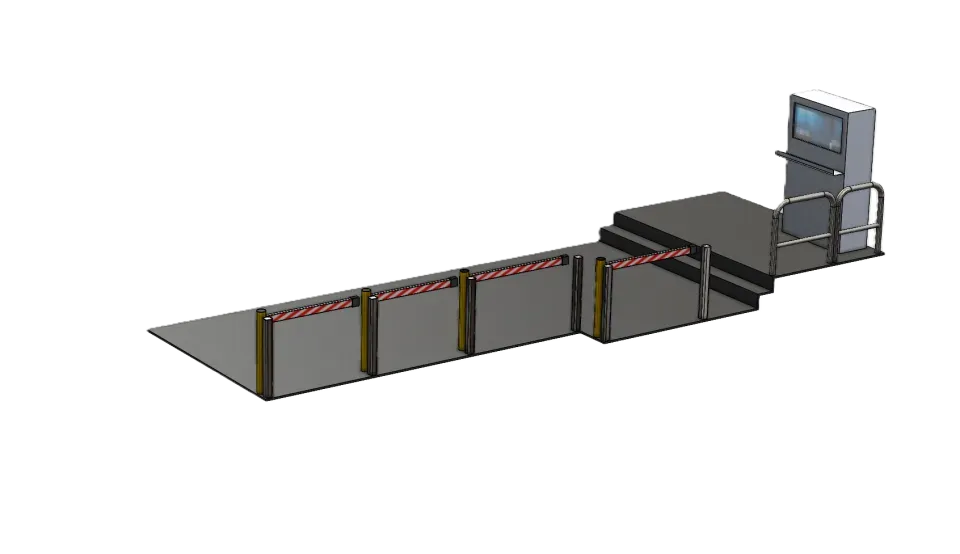
Value creation is only half of commercial responsibility. The other half is delivering to an approved allocation. The two-line jig-stripping facility was an approximately A$120k capital project. It involved external contractors, equipment, installation and commissioning, and it closed within about 1% of its allocation. I don't present that as a saving. It is evidence of disciplined cost monitoring through delivery.
Outcomes
| Initiative | Evidence |
|---|---|
| Specialised coating process | Developed in-house; recorded internal labour about one-third of the original allowance |
| Jig-stripping facility | Approx. A$120k project closed within about 1% of allocation |
| Production tooling strategy | Make-or-buy decisions based on cost, lead time and capacity |
| Production jig development | Throughput balanced against coating quality and lifecycle cost |
Beyond these individual results, the consistent outcome was a way of framing decisions. Technical performance, manufacturing capability, quality, resource capacity, cost and implementation risk were considered together rather than as separate conversations.
Professional Perspective
This body of work marks a real shift in how I approach engineering. As a toolmaker I learned how things are physically made. In product development I learned how design decisions shape manufacture. Operations Excellence showed me how whole production systems perform, and how technical choices flow through to cost, capacity, suppliers and risk.
The question I ask has moved from "can I engineer a solution?" to "is this the right solution for the operational and commercial requirement?" That second question sits at the centre of engineering project delivery. It is the capability I continue to build on.
Portfolio note: This case study describes my professional experience and contribution at a high level. Certain names, figures, technical details, images and commercial information may be omitted, generalised or anonymised to respect confidentiality, intellectual property and the interests of employers, customers, suppliers and project partners.