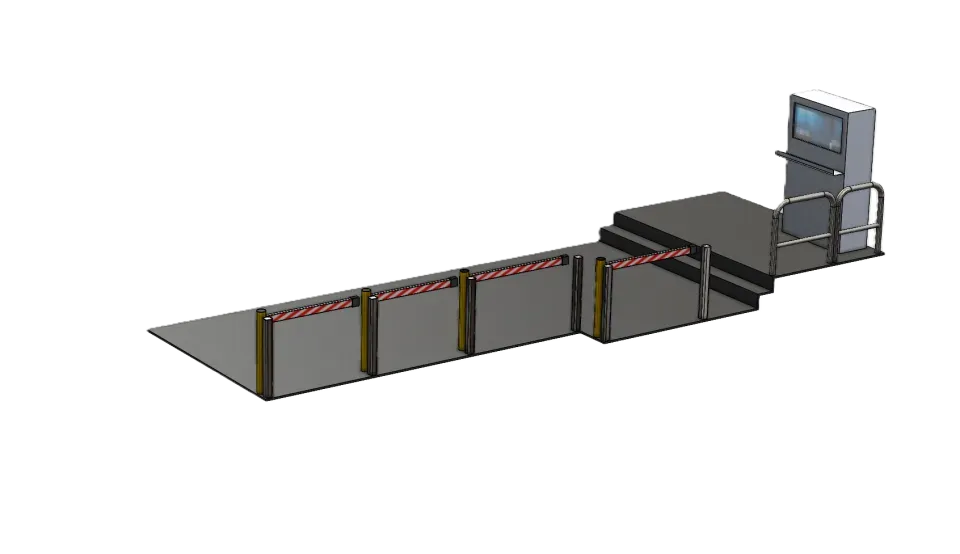
This project involved developing an industrial access-control and plant-layout concept for a pet food manufacturing facility where forklift movements, pedestrian access, maintenance activities and vehicle traffic needed to operate safely within the same environment.
My contribution focused on understanding the operational problem, reviewing movement through the facility, developing layout options and producing a practical engineering design that improved separation between people, mobile equipment and controlled-access areas.
The project demonstrates an important part of my engineering development: moving beyond component-level design and considering how equipment, people, safety requirements and operational workflows interact across an industrial site.
Project Context
The manufacturing facility operated with regular forklift movements, pedestrian activity and maintenance access requirements.
Existing circulation arrangements created points where different types of traffic could interact, increasing the importance of clearly controlled access and defined movement pathways.
The design challenge was therefore broader than simply selecting or positioning a boom gate.
The facility needed an integrated solution that considered vehicle access, pedestrian movement, forklift circulation, maintenance requirements, existing infrastructure and future operational needs.
Understanding the Operational Problem
The first stage was understanding how the area actually operated.
I reviewed site conditions, existing access arrangements, equipment locations and the movement of forklifts, employees and maintenance personnel through the relevant areas.
This allowed the design to be developed around real operational requirements rather than treating the access-control system as an isolated piece of equipment.
Potential conflict areas were identified and considered during development of the revised layout.
This process reinforced the importance of understanding the operating environment before progressing into detailed engineering.
Design Development
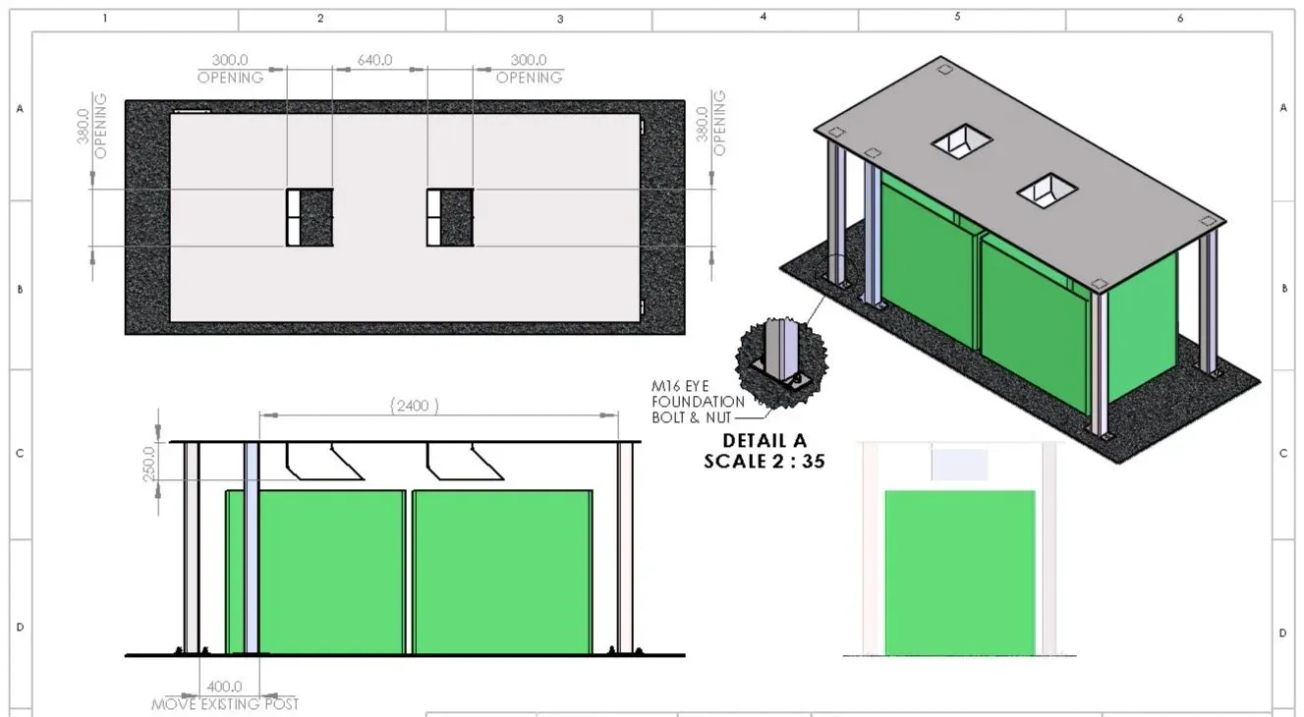
The design incorporated an automated boom-gate concept positioned to control access while maintaining practical movement through the facility.
The concept considered controlled entry, sensing and warning requirements, access-authorisation options and the relationship between the gate and surrounding traffic routes.
The position and operating arrangement were developed in conjunction with the wider plant layout rather than independently.
This was important because changing an access point can influence forklift routes, pedestrian circulation, maintenance access and general plant efficiency.
Plant Layout and Traffic Segregation
A significant part of the project involved reviewing the surrounding plant layout.
The objective was to establish clearer separation between pedestrian routes, forklift movements and areas required for maintenance access.
The layout therefore considered circulation zones, access points, equipment positioning and the ability of maintenance personnel to reach plant areas without creating unnecessary interaction with production traffic.
This systems-based view helped ensure that the proposed boom gate supported the overall operational layout rather than simply controlling one entrance.
Safety Considerations
Safety was central to the design.
The concept considered how engineering controls could help manage interactions between pedestrians, forklifts and other vehicle movements.
Gate positioning, warning systems, controlled access and clearly defined circulation areas were considered together as part of the overall risk-reduction approach.
The project strengthened my understanding that industrial safety is most effective when incorporated into equipment and layout design rather than being addressed only through procedures after installation.
Stakeholder Requirements
The proposed arrangement needed to satisfy several operational perspectives.
Production personnel required efficient movement through the facility. Maintenance personnel required reliable access to equipment. Management required improved control over restricted areas, while the engineering design needed to remain practical for future implementation.
Bringing those requirements together required communication, review and iterative development of the concept.
This stakeholder-focused approach has subsequently become an important part of how I manage engineering and improvement projects.
Implementation Planning
The concept was developed with modularity and staged implementation in mind.
Rather than requiring the entire area to be changed at once, the design considered how improvements could potentially be introduced progressively while maintaining ongoing manufacturing operations.
This was particularly relevant because industrial projects often have to be delivered around production constraints, access limitations and available capital.
Although the client ultimately decided not to proceed to construction, the engineering design and documentation established a defined solution that could support future implementation.
Project Deliverables
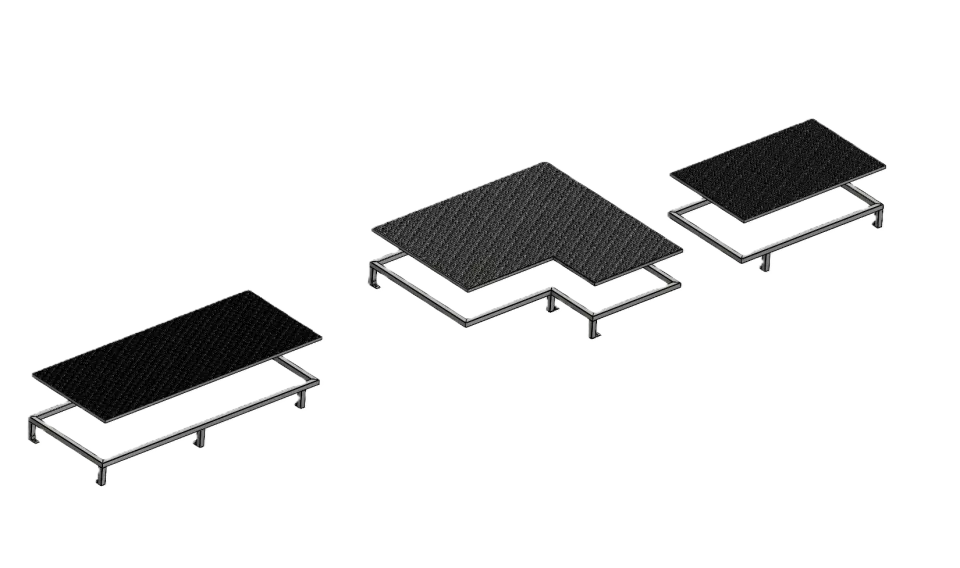
The work resulted in an industrial access-control concept, boom-gate arrangement, plant-layout revisions, traffic and circulation planning, pedestrian and forklift segregation considerations, maintenance-access planning and supporting engineering design documentation.
The project remained at the design stage and was not progressed through fabrication, installation or commissioning.
Project Outcome
The project produced a structured engineering response to an operational safety and access-control problem within an active manufacturing environment.
Its value was not limited to the boom gate itself.
The broader engineering work demonstrated how plant layout, equipment access, pedestrian safety, traffic control and maintenance requirements need to be considered as an integrated system.
For me professionally, the project represented another progression from detailed design toward broader engineering problem-solving and project coordination.
Capabilities Demonstrated
Industrial Plant Layout
Assessing how equipment, people and mobile plant interact within an operating manufacturing environment.
Engineering Problem Definition
Converting an operational safety concern into clearly defined engineering requirements.
Access-Control Design
Developing a practical controlled-access concept around the requirements of an industrial facility.
Safety by Design
Considering hazards and risk controls during development of the engineering solution rather than after implementation.
Traffic and Pedestrian Segregation
Reviewing the interaction between forklifts, vehicles, employees and maintenance personnel.
Stakeholder Coordination
Balancing production, maintenance, safety and management requirements during design development.
Design Development
Progressing from site observations and requirements through layout development and documented engineering concepts.
Implementation Thinking
Considering constructability, staged implementation, existing operations and future modifications while developing the design.
Career Development
This project is significant in my career progression because it illustrates the transition from designing individual components to solving broader operational problems.
The engineering challenge involved much more than CAD.
It required understanding how a manufacturing site operated, identifying the interfaces between people and equipment, defining requirements, developing a practical solution and coordinating competing stakeholder needs.
Those capabilities are directly relevant to the work I perform today across engineering project delivery, manufacturing improvement and operations excellence.
My technical design background allows me to understand the engineering detail, while my project-management development has increasingly focused my attention on the wider delivery environment including scope, stakeholders, safety, schedule, implementation, commissioning and handover.
This combination of engineering understanding and project-delivery capability is the direction in which I continue to develop my career.