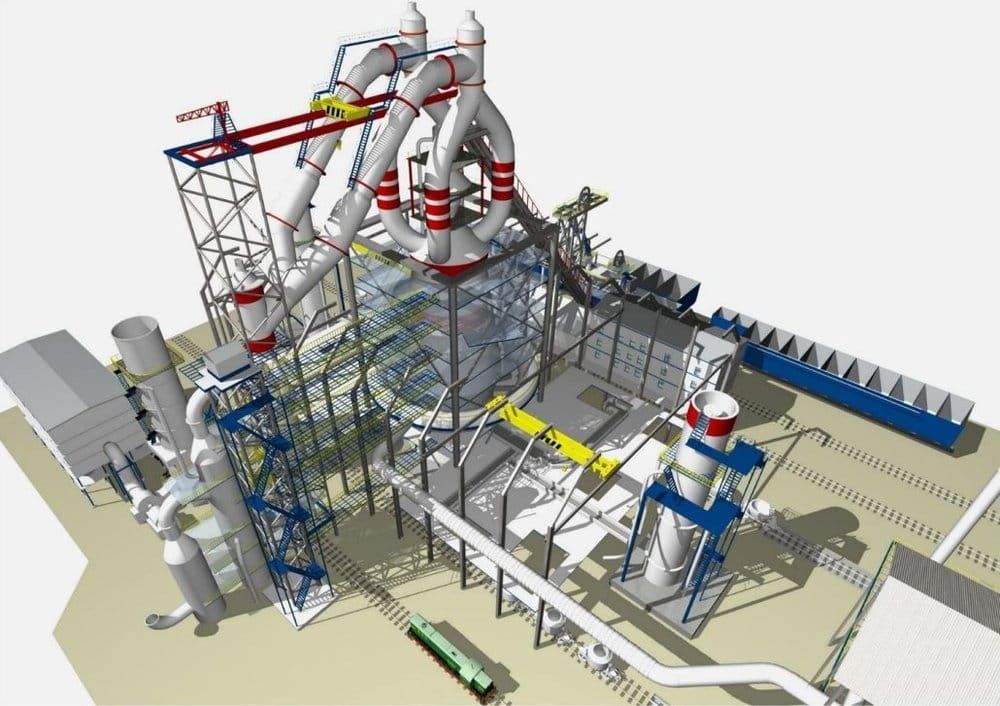
Client Environment: OneSteel Whyalla
Industry: Steel / Heavy Industrial
Project Type: Blast furnace maintenance and shutdown documentation
Role Focus: Technical drafting, maintenance sequencing and engineering documentation
This project involved supporting major maintenance activities associated with the blast furnace at OneSteel Whyalla through structural drafting, sequential work instructions and maintenance engineering documentation.
The work related to replacement of refractory brickwork and furnace liner components within a high-risk heavy-industrial environment.
My contribution focused on translating engineering and maintenance requirements into clear technical information that could support planning and execution of the work during a controlled maintenance period.
The project was particularly valuable in developing my understanding that major industrial maintenance is not simply an engineering-design exercise.
Successful execution depends on the relationship between:
Condition → Engineering Requirement → Work Sequence → Technical Documentation → Site Execution
Project Context
Blast furnaces operate continuously under extreme temperatures and demanding process conditions.
Over time, refractory materials and internal protective systems are exposed to significant thermal and operational wear.
Major maintenance therefore requires careful planning.
Unlike routine equipment servicing, blast-furnace maintenance can involve large numbers of interdependent activities that need to occur within a limited shutdown window.
The work may require consideration of:
- Existing furnace condition
- Refractory removal
- Replacement sequence
- Structural access
- Equipment interfaces
- Temporary conditions
- Installation sequence
- Contractor activities
- Safety requirements
- Technical documentation
- Quality and inspection requirements
The challenge is not only defining the required final condition.
The project also needs to define a safe and practical path from the existing condition to the completed repair.
Shutdown-Oriented Engineering
This project provided valuable exposure to shutdown-driven engineering.
During normal operations, additional time may sometimes be available to resolve engineering questions.
During a major furnace shutdown, every delay can affect the wider project schedule and potentially the return of the plant to operation.
Preparation therefore becomes extremely important.
Technical information needs to be sufficiently developed before the relevant site activity begins.
This includes understanding:
- What will be removed
- What will be retained
- What needs to be replaced
- What activity happens first
- What activities depend on earlier work
- What access is required
- What information site teams need at each stage
This project strengthened my understanding that engineering documentation can directly influence schedule performance.
Refractory Replacement
A major focus of the maintenance work related to refractory brick and liner replacement.
Refractory systems are critical because they protect the furnace structure from the extreme thermal conditions generated during operation.
Maintenance documentation therefore needed to support the planned removal and replacement activities.
My role was centred on representing the engineering and maintenance requirements through technical drawings and sequential documentation.
This included helping communicate:
- Existing furnace arrangement
- Relevant work areas
- Removal stages
- Replacement areas
- Component relationships
- Installation sequence
- Supporting technical information
Specialist refractory engineering, material specification and final technical approval remained with the responsible engineering and furnace specialists.
Sequential Maintenance Documentation
One of the most important features of this project was the development of 2D sequential instructions.
Rather than showing only the final completed arrangement, the documentation helped communicate how the work was intended to progress through different stages.
This is significantly different from conventional drafting.
A final-state drawing answers:
What should it look like when complete?
Sequential documentation answers:
How do we safely and practically get from the existing condition to that completed state?
That required thinking about dependencies between individual maintenance activities.
Sequence Planning
The maintenance sequence needed to account for the relationship between activities.
A simplified sequence can be represented as:
Existing Condition → Access → Removal → Inspection → Preparation → Replacement → Verification → Completion
Each step can depend on the successful completion of the previous stage.
The documentation therefore needed to make the intended order clear.
Poor sequencing can create problems such as:
- Restricted access
- Rework
- Conflicting activities
- Unnecessary downtime
- Unsafe working conditions
- Delayed installation
The project reinforced the importance of planning implementation before work reaches the site.
Structural Drafting
Structural drafting also formed part of the project support.
Furnace maintenance may require work around existing structural elements, access arrangements and supporting systems.
Engineering information therefore needed to be translated into controlled drawings showing relevant structures and their relationship to the maintenance activity.
My contribution involved accurate representation of the engineering requirements.
Structural design calculations, verification and certification remained with the responsible engineers.
Working with Existing Assets
Blast-furnace maintenance is inherently brownfield work.
The engineering team is not starting with an empty site.
The work needs to be carried out around an existing asset containing years of operating history and established infrastructure.
This requires a different mindset from new-build engineering.
The process begins with:
What exists?
followed by:
What has changed?
and finally:
What work is required to restore or improve the asset?
This experience strengthened my ability to interpret existing conditions and develop documentation around real operating assets.
High-Risk Industrial Environment
The project was undertaken within a heavy-industrial environment where maintenance activities involved significant hazards and tightly controlled work practices.
My drafting and documentation work needed to support the engineering and project requirements established for the maintenance program.
This meant that drawings and sequential instructions needed to be:
- Clear
- Consistent
- Controlled
- Unambiguous
- Suitable for review
- Appropriate for site use
Formal hazard assessment, shutdown management, permit systems and site safety remained under the authority of the responsible project and operational teams.
For my portfolio, the important experience is working within a high-risk engineering environment where documentation quality and sequence control are critical.
Engineering-to-Site Translation
This project strengthened my understanding of the engineering-to-site interface.
A maintenance requirement may begin as an engineering decision, but it eventually needs to be physically executed by people working within the plant.
There is therefore an important information chain:
Engineering Requirement → Drawing → Work Instruction → Site Team → Maintenance Activity
Each stage depends on the clarity of the previous one.
A technically correct engineering decision can still become difficult to implement if the documentation is incomplete or unclear.
My role helped support that translation process.
Constructability and Access
Maintenance documentation also needs to reflect how work can practically be performed.
A repair may be technically necessary, but the project still needs to determine:
- How will personnel gain access?
- What needs to be removed first?
- Is sufficient working space available?
- Can replacement materials reach the work area?
- Does one activity block another?
- Are temporary conditions created during the work?
These constructability considerations influenced how sequential information needed to be communicated.
The project reinforced the principle:
Engineering needs to consider not only the required outcome but also the practical route to implementation.
Revision and Drawing Control
Major maintenance projects can generate changing information as work progresses.
Once existing components are exposed, actual site conditions can sometimes differ from earlier information.
This makes drawing and revision control particularly important.
The technical documentation needed to remain traceable as requirements changed.
Controlled revisions help prevent situations where different teams work from conflicting information.
This experience later became highly transferable to my product-development and manufacturing projects.
Project Scheduling Awareness
Although my role was focused on engineering documentation rather than ownership of the overall shutdown schedule, the project provided practical exposure to schedule-driven industrial maintenance.
Sequential drawings clearly demonstrated how technical activities relate to project timing.
For example:
Activity B cannot start until Activity A creates access.
and:
Activity C cannot proceed until Activity B has been inspected.
These dependencies are the same principles that later became central to my formal project-management development.
This project therefore helped create an early practical understanding of scheduling before I later studied project management academically.
Stakeholder Coordination
Industrial shutdowns involve multiple stakeholders.
Depending on the work package, these may include:
- Engineering teams
- Maintenance planners
- Refractory specialists
- Structural personnel
- Contractors
- Supervisors
- Safety teams
- Quality personnel
- Operations
Technical documentation provides a common reference between these groups.
The drawings and sequential instructions therefore supported communication across different responsibilities.
This strengthened my understanding of a principle that has remained important throughout my career:
Project delivery depends on coordinating the interfaces between different people as much as the interfaces between different components.
Documentation Quality
The quality of maintenance documentation can directly influence project execution.
Clear information can reduce uncertainty.
Unclear information can generate questions at exactly the time when the project can least afford delay.
The documentation therefore required careful attention to:
- Sequence
- Notes
- References
- Geometry
- Drawing relationships
- Revision status
- Technical clarity
This discipline became an important part of my wider engineering foundation.
Project Deliverables
My contribution included work associated with:
- Blast-furnace maintenance CAD documentation
- Structural drafting
- Refractory and liner replacement documentation
- Existing-condition interpretation
- 2D sequential maintenance instructions
- Removal and installation sequence information
- Maintenance-work drawings
- Drawing revisions
- Technical-documentation coordination
- Information supporting shutdown and site teams
Specialist furnace engineering, refractory specification, shutdown control and final engineering approval remained with the responsible specialists and authorised project personnel.
Project Outcome
The project provided technical documentation supporting a major blast-furnace maintenance program at OneSteel Whyalla.
From my professional-development perspective, its greatest value was understanding how engineering information supports time-critical implementation.
The work demonstrated that major maintenance delivery requires more than identifying the required repair.
The complete process is:
Identify → Engineer → Sequence → Document → Execute → Verify → Return to Operation
My contribution was centred around the engineering-documentation and sequencing stages, but understanding the full process significantly broadened my project perspective.
Capabilities Demonstrated
Shutdown Maintenance Support
Producing engineering information suitable for use within a major industrial maintenance environment.
Maintenance Engineering Documentation
Translating technical maintenance requirements into structured drawings and instructions.
Sequential Work Planning
Developing 2D information showing how complex work could progress through defined stages.
Refractory Replacement Support
Documenting work associated with furnace refractory brick and liner replacement.
Structural Drafting
Representing structural and maintenance engineering requirements accurately.
Brownfield Engineering
Working around an existing operating asset and established industrial infrastructure.
Constructability Awareness
Considering the practical sequence required to implement maintenance work.
High-Risk Industrial Experience
Working within a controlled heavy-industry project environment where information accuracy was important.
Engineering-to-Site Coordination
Supporting the translation of engineering decisions into information usable by site personnel.
Revision Control
Maintaining controlled technical information as project requirements developed.
Schedule Awareness
Understanding how engineering dependencies and work sequencing influence major maintenance schedules.
Stakeholder Coordination
Providing technical information shared across engineering, contractors, maintenance and project teams.
Career Development
The OneSteel Whyalla blast-furnace project is an important early example of the project-delivery thinking that later became central to my career.
My previous technical experience had taught me:
How components are designed and manufactured.
Projects such as this taught me:
How engineering work needs to be planned and executed in sequence within a live industrial environment.
That is an important distinction.
The questions expanded from:
What should be designed?
to:
What already exists?
What needs to be removed?
What comes first?
What depends on what?
What information does the site team need?
What happens if work is delayed?
How are changes communicated?
How does the plant eventually return to service?
Those are fundamentally project-delivery questions.
My later formal education in project management gave me frameworks and terminology for concepts such as dependencies, sequencing, stakeholders, schedule risk and execution planning.
But projects such as the Whyalla blast furnace provided practical exposure to those concepts much earlier in my career.
The progression can therefore be seen as:
Toolmaking → Design → Manufacturing → Heavy-Industrial Maintenance → Shutdown Sequencing → Systems Engineering → Project Delivery → Operations Excellence
That combination of hands-on manufacturing understanding, engineering design and project thinking continues to shape how I approach engineering projects today.