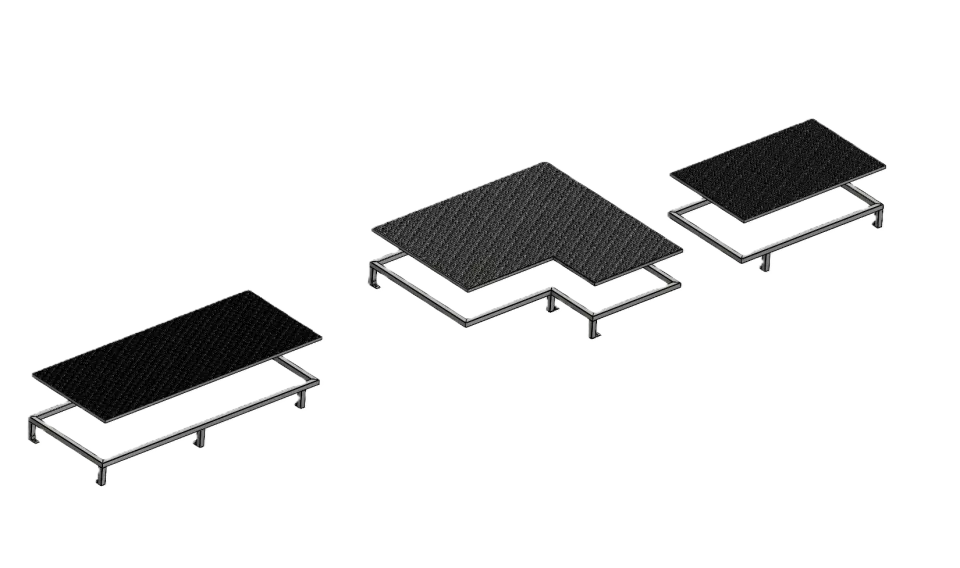
This project involved developing a stainless-steel maintenance access platform for equipment located within an operational food-manufacturing environment.
The engineering challenge extended beyond designing a structural platform. The solution needed to provide safe and practical maintenance access while considering hygiene requirements, surrounding equipment, available space, operational constraints and future installation.
My contribution involved understanding the site conditions, translating operational requirements into an engineering concept, developing the platform in 3D CAD and preparing a practical design suitable for review and potential fabrication.
Project Context
Maintenance personnel required improved access to plant and equipment within a hygiene-sensitive production area.
Any proposed structure therefore needed to work within an existing manufacturing environment where equipment layout, cleaning requirements, personnel movement and production activities already imposed constraints on the available space.
The design needed to address several requirements simultaneously:
- Safe maintenance access
- Structural integrity
- Food-manufacturing hygiene considerations
- Corrosion resistance
- Cleaning accessibility
- Integration with existing equipment
- Practical fabrication and installation
- Future maintenance requirements
This made the project a good example of designing around an operational system rather than designing an isolated structure.
Site Assessment and Requirements
The project began with understanding the existing plant arrangement and the maintenance-access problem.
Site conditions and surrounding infrastructure were reviewed to determine where the platform could be positioned and how maintenance personnel would need to access the equipment.
Existing equipment, available clearances and operational movement around the area influenced the design.
This information was translated into a set of practical engineering requirements before progressing further into the design.
The process reinforced an important principle that I continue to apply in engineering projects: understand the operational problem before developing the technical solution.
Concept Development
Several considerations had to be balanced during development of the platform concept.
The structure needed to provide sufficient working access without unnecessarily interfering with surrounding production equipment or plant movement.
The arrangement was progressively developed around the available space, required access points and expected maintenance activities.
Three-dimensional modelling was particularly valuable during this stage because it allowed the relationship between the proposed platform and surrounding equipment to be reviewed before fabrication.
Potential access issues and spatial conflicts could therefore be identified during the design stage rather than during installation.
Mechanical and Structural Design
The platform was developed as a stainless-steel structure suitable for the intended manufacturing environment.
The design considered structural members, platform surfaces, access arrangements, connections and the overall configuration required to provide a stable working area.
Material utilisation and structural arrangement were considered together to develop a practical design without adding unnecessary complexity or material.
Design decisions were also influenced by fabrication and assembly requirements.
Rather than developing a structure that worked only theoretically, consideration was given to how individual components could be manufactured, transported, assembled and potentially installed within the existing facility.
Hygiene-Critical Design
Because the platform was intended for a food-manufacturing environment, hygiene influenced several aspects of the design.
Material selection, surface configuration and accessibility for cleaning needed to be considered alongside normal structural requirements.
Stainless steel provided appropriate corrosion resistance and suitability for environments where regular cleaning is required.
The design also considered reducing unnecessary areas where contamination or debris could accumulate and maintaining practical access for cleaning around the structure.
This project broadened my understanding of how the operating environment can significantly influence engineering design decisions.
Safety and Maintainability
Providing maintenance access was the primary purpose of the project, making safety and maintainability central design considerations.
The platform concept considered:
- Safe working access
- Walking and standing surfaces
- Access and egress
- Edge protection
- Equipment clearances
- Maintenance working space
- Cleaning access
- Interaction with surrounding operations
The objective was to create an arrangement that allowed maintenance activities to be performed more safely and effectively without introducing unnecessary restrictions into the production area.
3D Design and Design Review
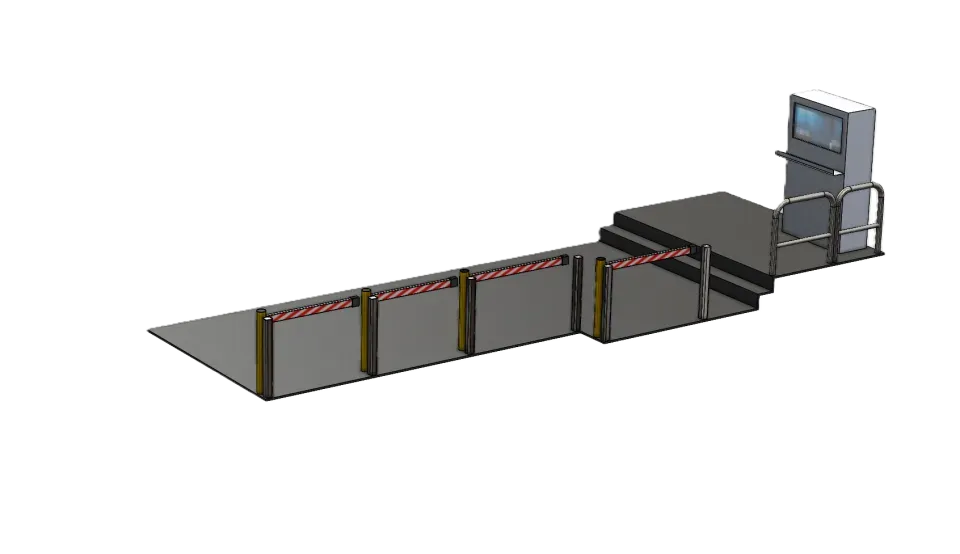
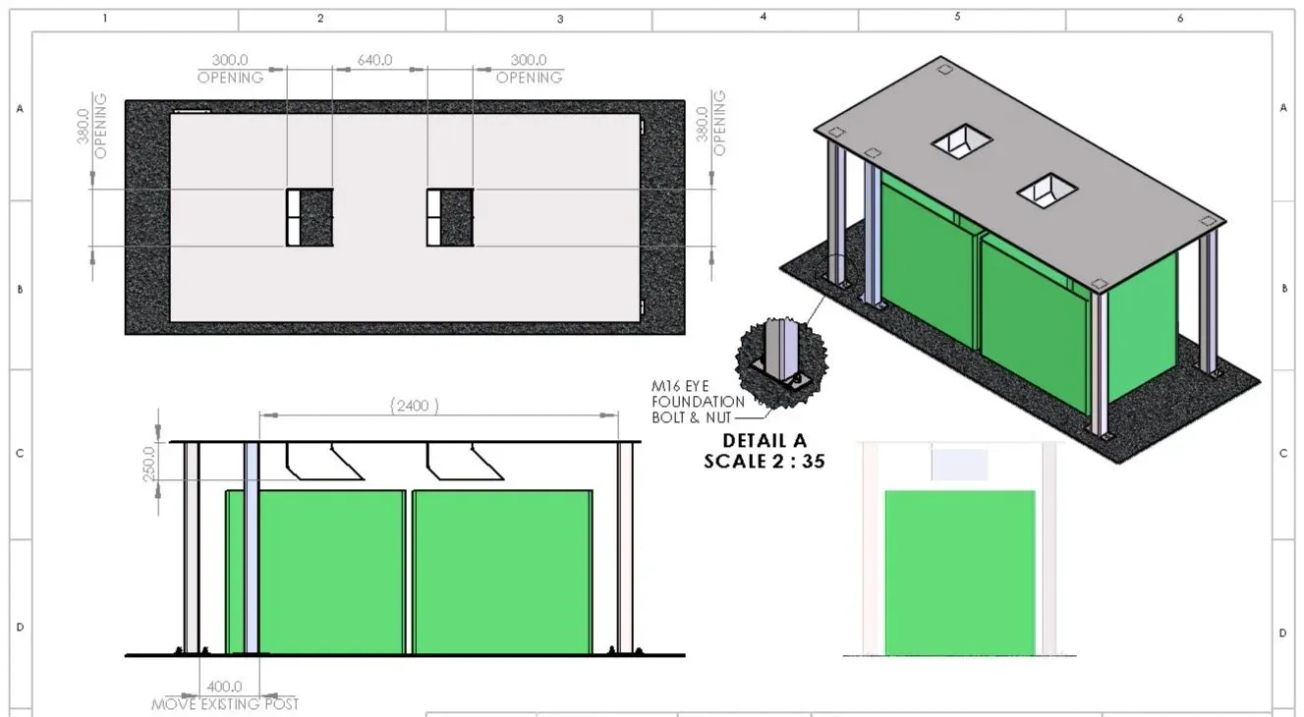
A detailed 3D CAD model was developed to communicate the proposed solution and evaluate its integration with the existing plant.
The model provided a useful visual reference for discussing the concept with stakeholders.
It also allowed changes to be incorporated efficiently as requirements were clarified.
This iterative approach helped connect engineering design with stakeholder review rather than treating design as a one-directional process.
Stakeholder Coordination
The project involved coordinating requirements between the manufacturing client, engineering/design stakeholders and MNA Solutions.
Different stakeholders had different priorities.
Maintenance personnel required practical equipment access. Production needed minimal disruption. Engineering needed a technically workable solution, while fabrication and installation considerations also had to be incorporated into the design.
Understanding these different requirements and bringing them together into a practical engineering solution formed an important part of the project.
Design for Manufacture and Installation
Fabrication and installation requirements were considered during development rather than being left until after the design was completed.
A modular approach was considered so that components could be manufactured and assembled in manageable sections.
This was particularly relevant because modifications within an existing manufacturing facility can involve restricted access and limited opportunities for prolonged production interruption.
Designing with assembly and installation in mind therefore helped make the concept more practical for potential implementation.
Project Deliverables
The project produced a developed engineering concept including:
- Site and operational assessment
- Maintenance-access requirements
- Stainless-steel platform concept
- 3D CAD model
- Structural and mechanical design considerations
- Platform and access arrangement
- Hygiene and cleaning considerations
- Fabrication and assembly considerations
- Stakeholder design-review information
- Engineering documentation supporting future implementation
The project progressed through engineering design but was not advanced to fabrication, installation or commissioning.
Project Outcome
The completed design provided a defined engineering solution for improving maintenance access within a hygiene-sensitive manufacturing environment.
Although the client ultimately did not progress the project into construction, the engineering work demonstrated how operational requirements, maintenance needs, hygiene, safety, fabrication and existing plant constraints can be integrated into a single design.
The project also strengthened my experience working within an active manufacturing environment where an engineering solution must work not only technically but operationally.
Capabilities Demonstrated
Site Assessment
Understanding existing equipment, plant constraints and operational requirements before developing the solution.
Mechanical Design
Developing the platform structure, access arrangement and associated engineering details.
3D CAD Development
Using three-dimensional modelling to develop, review and communicate the engineering solution.
Plant Engineering
Designing equipment and structures that must integrate with an existing manufacturing environment.
Maintenance Engineering
Understanding maintenance-access requirements and incorporating maintainability into the design.
Safety by Design
Considering personnel access, working areas, clearances and potential hazards during engineering development.
Hygiene-Critical Design
Considering material selection, cleanability and environmental requirements relevant to food manufacturing.
Design for Manufacture and Assembly
Considering how the proposed structure could be fabricated, transported, assembled and installed.
Stakeholder Coordination
Translating different operational and technical requirements into a coordinated engineering solution.
Engineering Project Delivery
Progressing an operational requirement through investigation, requirements definition, concept development, design review and technical documentation.
Career Development
This project represents another stage in my progression from detailed mechanical design toward broader engineering project delivery.
The technical task was to design a platform, but the broader engineering challenge involved understanding why it was required, how maintenance personnel would use it, how it would interact with the existing plant, how hygiene and safety requirements influenced the design and how the structure could eventually be fabricated and installed.
That broader perspective has become increasingly important throughout my career.
My background in detailed design allows me to understand technical requirements at component level, while my later experience in manufacturing, operations excellence and project management has expanded that perspective to include scope, stakeholders, safety, constructability, implementation, commissioning and handover.
This combination of technical engineering knowledge and project-delivery capability continues to support my progression toward larger engineering and project leadership responsibilities.