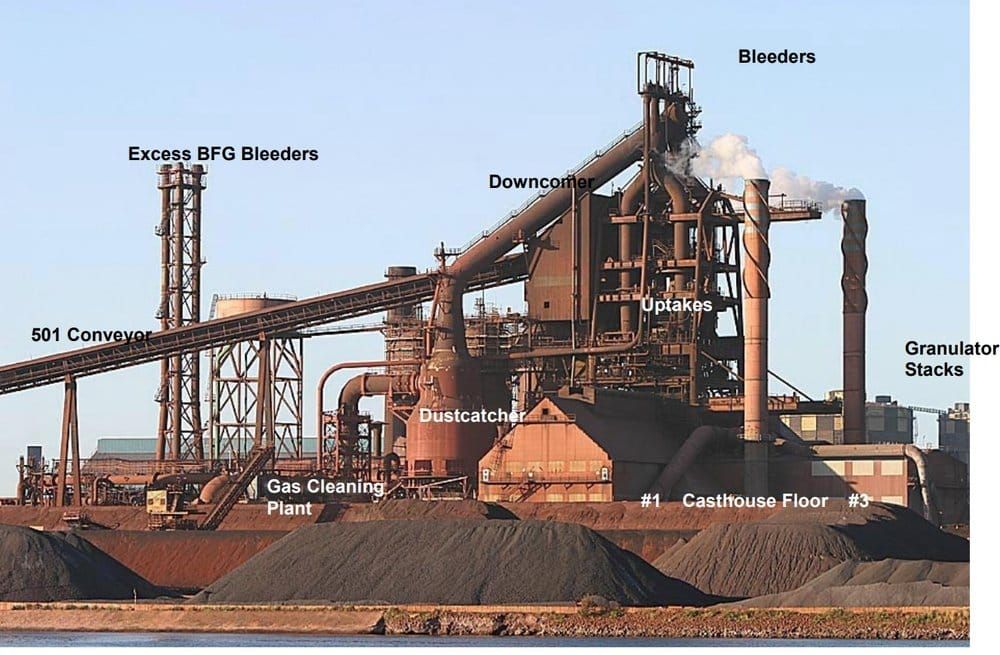
Client Environment: BlueScope Steel
Industry: Steel / Heavy Industrial
Project Type: Plant design, structural and piping documentation
This project involved supporting engineering design and documentation associated with BlueScope Steel's Coke Plant No. 5.
Working within an established steel-production facility required structural elements, piping systems and surrounding plant infrastructure to be considered together rather than as independent engineering disciplines.
My contribution focused on technical design and drafting, interpretation of engineering requirements, structural and piping coordination and development of documentation capable of supporting engineering review, fabrication and construction activities.
The project provided valuable experience in multidisciplinary industrial engineering and strengthened my understanding of one of the most important aspects of complex project delivery:
the interfaces between systems are often where the greatest engineering challenges occur.
Project Context
A coke-processing facility contains a dense combination of structures, equipment, pipework, platforms, access systems and other industrial infrastructure.
Within this type of environment, a proposed engineering change cannot be developed in isolation.
A structural member may affect a pipe route.
A pipe route may affect maintenance access.
Equipment positioning may influence structural supports.
A proposed modification may need to work around plant infrastructure that cannot easily be relocated.
The engineering environment therefore required consideration of:
- Existing structures
- Piping systems
- Equipment
- Structural supports
- Platforms and access
- Clearances
- Construction requirements
- Fabrication
- Maintenance
- Existing plant interfaces
This made multidisciplinary coordination an important part of the project.
Existing Plant Environment
Unlike a greenfield project, the Coke Plant No. 5 work was undertaken around an established industrial facility.
Existing infrastructure established the boundaries within which new or modified systems needed to fit.
This required understanding:
What already exists?
before determining:
Where can the proposed engineering solution fit?
Existing-condition information therefore formed an important part of the design process.
Drawings and available engineering information needed to be interpreted carefully so that proposed structural and piping changes could be coordinated with the surrounding plant.
This is a fundamental principle of brownfield engineering.
The existing asset is part of the design brief.
Multidisciplinary Plant Design
One of the strongest aspects of this project was exposure to multiple engineering systems within the same design environment.
Structural design information could not be considered separately from piping and equipment requirements.
The engineering relationship can be represented as:
Structure ↔ Piping ↔ Equipment ↔ Access ↔ Existing Plant
A change to any one of these could potentially affect the others.
This required a more integrated engineering approach than simply producing individual discipline drawings.
It strengthened my understanding of how design coordination becomes increasingly important as project complexity grows.
Structural Design Documentation
Structural documentation formed part of my contribution.
Engineering requirements needed to be represented through clear drawings showing how structural elements related to the wider plant.
The documentation could include information associated with:
- Structural members
- Supports
- Platforms
- Brackets
- Connections
- Equipment-support arrangements
- Existing structures
- Proposed modifications
My role centred on accurately translating the engineering requirements into coordinated technical information.
Structural analysis, final engineering verification and certification remained with the responsible professional engineers.
Piping Design Coordination
Piping introduced another important engineering layer.
Industrial pipework needs to travel between equipment while negotiating structures, access areas and surrounding plant infrastructure.
A pipe route therefore needs to consider much more than the shortest distance between two connection points.
Practical considerations include:
- Structural obstructions
- Equipment interfaces
- Supports
- Access
- Maintenance
- Clearances
- Fabrication
- Installation
- Adjacent systems
The project strengthened my understanding that successful piping design depends heavily on coordination with other disciplines.
Clash Detection and Spatial Coordination
A key aspect of multidisciplinary plant design is identifying conflicts before they become site problems.
Potential clashes can occur between:
- Pipework and structures
- Pipework and equipment
- Structures and access routes
- Supports and surrounding plant
- Proposed systems and existing infrastructure
Identifying these conflicts during the design stage is considerably more efficient than discovering them during fabrication or installation.
The coordination process therefore involved reviewing the spatial relationships between engineering systems and resolving or communicating potential conflicts before construction.
This is an important project-delivery principle:
Resolve interfaces in the design environment whenever possible, rather than transferring them to the construction site.
Design Integration
Plant engineering requires individual design elements to work as a complete system.
A structurally sound support may still create a project problem if it blocks a pipe route.
A technically correct pipe route may be impractical if it prevents maintenance access.
An equipment arrangement may create additional structural requirements.
The engineering process therefore involved understanding how each discipline influenced the others.
This strengthened a systems-oriented way of thinking that became increasingly important in my later mechanical and manufacturing projects.
Rather than asking only:
Is this individual design correct?
the broader question becomes:
Does this design work with everything around it?
Engineering Documentation
CAD drawings and technical documentation provided the common language between engineering disciplines.
Information needed to be sufficiently clear and coordinated to support:
- Engineering review
- Design coordination
- Fabrication
- Construction planning
- Installation
- Revision control
This required disciplined drafting and documentation practices.
In a multidisciplinary project, inconsistency between drawings can create substantial downstream problems.
Technical documentation therefore needed to communicate both the individual design and its relationship with surrounding systems.
Constructability
The project also reinforced the importance of considering how engineering designs would eventually be constructed.
A design may be technically correct but difficult to install because of limited access or existing infrastructure.
Constructability thinking therefore includes questions such as:
- Can the component be fabricated?
- Can it physically reach its installation location?
- Is sufficient installation access available?
- Does the sequence affect existing equipment?
- Are surrounding structures creating restrictions?
- Can piping and supports be installed practically?
- Can the completed system still be maintained?
Considering these questions during design reduces the risk of transferring avoidable problems to the site team.
Fabrication Interface
Structural and piping systems ultimately need to be manufactured or fabricated.
Engineering drawings therefore needed to communicate information that could support physical production.
This strengthened my understanding of the relationship:
Engineering Requirement → Technical Drawing → Fabrication → Construction → Operating Plant
Each stage depends on reliable information from the previous stage.
A drawing error may eventually become a fabrication error.
A coordination error may become a construction delay.
The quality of engineering information therefore directly influences project delivery.
Engineering Change
Working within an existing plant also means designs may need to evolve as additional information becomes available.
Changes can result from:
- Existing-condition clarification
- Engineering review
- Construction requirements
- Interface conflicts
- Updated project requirements
When one system changes, related drawings or systems may also need to be reviewed.
This strengthened my understanding of engineering change as a coordinated activity rather than simply revising one drawing.
Revision Control
Controlled documentation was particularly important in a project involving multiple engineering disciplines.
Teams need confidence that they are working from the correct information.
Revision management therefore supports:
- Design consistency
- Engineering review
- Fabrication accuracy
- Construction planning
- Traceability
This experience later became directly transferable to product-development and manufacturing projects where engineering changes affected components, tooling, suppliers, quality and production.
Engineering and Construction Interface
This project helped develop my understanding of the relationship between design-office decisions and construction-site reality.
Technical decisions eventually need to become physical structures, pipework and installed systems.
The overall sequence can be viewed as:
Requirement → Engineering → Coordination → Documentation → Fabrication → Installation
My role was concentrated within the engineering documentation and coordination stages.
However, understanding how that information affected later activities helped broaden my perspective from drafting toward project delivery.
Safety-Critical Industrial Environment
Steel and coke-processing facilities operate within demanding industrial conditions.
Engineering changes therefore needed to be developed within established plant and project requirements.
My work supported this process through accurate technical documentation and design coordination.
Formal process safety, structural verification, hazard studies and engineering approval remained with the relevant authorised engineers and project personnel.
For my portfolio, the important point is that I gained experience operating within a complex, safety-critical industrial engineering environment where documentation accuracy and system interfaces matter.
Stakeholder and Discipline Coordination
Different project stakeholders required different technical information.
Structural engineers focused on structural requirements.
Piping personnel focused on routing and equipment interfaces.
Fabricators needed manufacturable details.
Construction teams needed practical installation information.
Project personnel needed coordinated and controlled documentation.
The design information therefore acted as a common communication platform between multiple disciplines.
This was valuable early experience in a principle that later became central to my project-management work:
Complex projects succeed when technical disciplines are aligned around the same project outcome.
Project Deliverables
My contribution included work associated with:
- Industrial plant CAD drafting
- Existing-condition interpretation
- Structural design documentation
- Piping design documentation
- Structural and piping coordination
- Spatial coordination
- Clash identification and design review support
- Equipment and plant interface documentation
- Construction-oriented drawings
- Fabrication information
- Design revisions
- Drawing control
- Engineering documentation supporting multidisciplinary project delivery
Detailed engineering calculations, specialist process design and formal engineering certification remained with the appropriately responsible engineering professionals.
Project Outcome
The work produced coordinated engineering documentation supporting structural and piping activities within BlueScope Steel's Coke Plant No. 5 environment.
The professional value of the project extended beyond drafting.
It provided practical exposure to the complexity created when multiple engineering systems need to occupy the same physical environment.
The project reinforced that major industrial engineering problems often exist at the interfaces:
Structure ↔ Pipework
Pipework ↔ Equipment
Equipment ↔ Access
New Work ↔ Existing Plant
Managing those interfaces effectively is an important part of both engineering coordination and project delivery.
Capabilities Demonstrated
Heavy-Industrial Plant Design
Working with engineering information within a complex steel-production environment.
Brownfield Engineering
Developing technical documentation around established structures, equipment and operating constraints.
Structural Drafting
Translating structural engineering requirements into coordinated technical drawings.
Piping Design Coordination
Understanding pipe routing and its relationship with structures, equipment, access and surrounding plant.
Multidisciplinary Coordination
Considering multiple engineering disciplines within one integrated project environment.
Clash Detection
Identifying potential spatial conflicts during design rather than allowing them to emerge during construction.
Constructability
Considering how proposed engineering solutions could practically be fabricated and installed.
Engineering Interfaces
Understanding how decisions within one discipline can create consequences in another.
Design Change Management
Coordinating engineering changes across interconnected technical information.
Revision Control
Maintaining accurate and traceable documentation through design development.
Engineering-to-Construction Translation
Producing technical information capable of supporting fabrication and site implementation.
Career Development
The BlueScope Coke Plant No. 5 project was particularly important in developing my understanding of multidisciplinary engineering coordination.
Earlier technical experience had taught me to understand individual components, structures and manufacturing processes.
This project introduced a broader question:
How do several engineering disciplines work together within the same physical plant?
The answer required thinking about more than drawings.
It required understanding interfaces.
A structural decision could affect piping.
A piping decision could affect maintenance.
An equipment decision could affect both.
That moved my thinking further along the progression:
Component → Assembly → System → Plant → Multidisciplinary Project
This mindset has remained highly relevant throughout my later career.
In product development, I needed to coordinate design, manufacturing, tooling and quality.
In operations excellence, I now coordinate engineering, production, contractors, systems, safety and stakeholders.
The scale has changed, but the fundamental principle has not:
successful project delivery depends on managing interfaces between people, disciplines and systems.
My early BlueScope experience helped establish that foundation and contributed to my progression from detailed design into broader engineering project delivery.