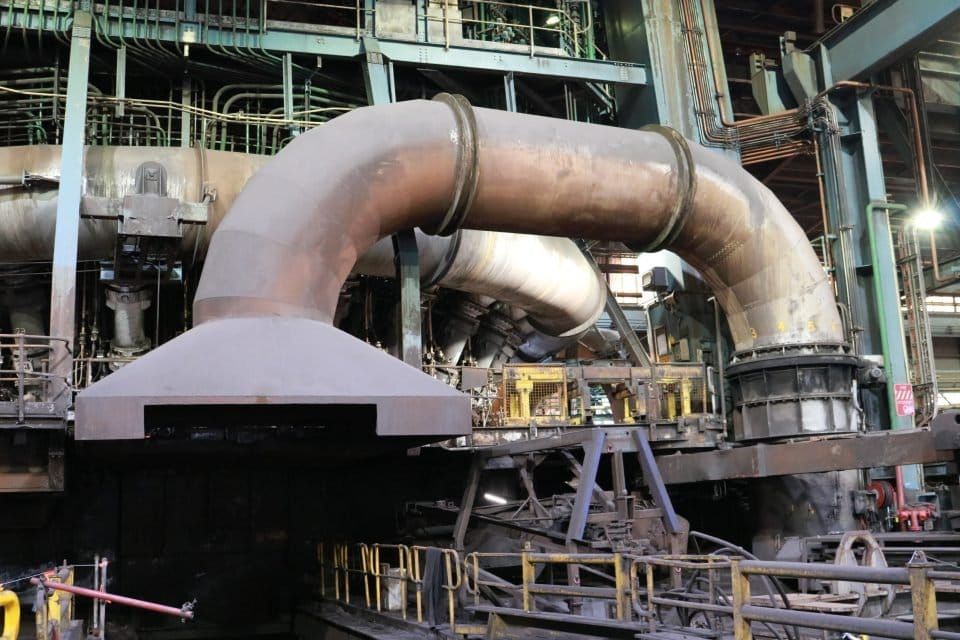
Client Environment: BlueScope Steel
Industry: Steel / Heavy Industrial
Project Period: 2010–2011
Role: Design Drafter / Engineering Documentation Support
This project involved supporting maintenance and upgrade activities associated with BlueScope Steel’s Coke Plant No. 6 through structural drafting, engineering documentation and installation-sequence information.
Unlike new-build engineering, maintenance work within an established steel-production facility requires designs and documentation to work around existing structures, equipment, access limitations and operational constraints.
My contribution focused on translating engineering requirements and existing-plant information into clear technical drawings that could support planning, fabrication and site execution.
The project provided valuable early experience in brownfield industrial engineering and helped develop my understanding of how technical documentation contributes directly to safe and controlled project delivery.
Project Context
Steelmaking facilities contain large interconnected structures and equipment systems that have often evolved over many years.
Maintenance or modification work therefore cannot be developed independently of the surrounding plant.
Existing structures, equipment, services and access arrangements all influence how an engineering change can be implemented.
The project required consideration of several interconnected factors:
- Existing structural conditions
- Maintenance requirements
- Access limitations
- Installation sequence
- Fabrication information
- Existing plant interfaces
- Shutdown constraints
- Site safety
- Drawing revisions
- Engineering coordination
The engineering drawings therefore needed to communicate not only the final arrangement but also enough information to help stakeholders understand how the work could be carried out within the existing facility.
Brownfield Engineering Environment
One of the most important aspects of the project was working within an established industrial plant.
Brownfield engineering presents different challenges from greenfield design.
In a new facility, equipment and structures can often be positioned around an optimised layout.
In an existing coke plant, the design must work around what is already there.
That means considering:
Existing Structure + Existing Equipment + Access + Operations + Proposed Modification
before determining whether a proposed solution is practical.
This experience strengthened my ability to understand engineering changes in the context of a larger operating system.
Existing-Condition Interpretation
Engineering documentation for maintenance work begins with understanding the existing plant.
Available drawings, engineering information and site-related inputs needed to be interpreted before modifications could be represented accurately.
The work required attention to:
- Existing structural geometry
- Member locations
- Equipment interfaces
- Connection points
- Clearances
- Surrounding infrastructure
- Proposed modifications
This type of work strengthened my ability to interpret engineering information rather than simply create new geometry from a blank starting point.
Structural Drafting
Structural drafting formed an important part of my contribution.
Engineering requirements needed to be converted into drawings that clearly represented the proposed maintenance or upgrade work.
Documentation could include information associated with:
- Structural members
- Supports
- Brackets
- Platforms
- Connections
- Existing and proposed conditions
- Fabrication details
- Installation information
My role was to accurately represent the engineering intent within the technical documentation.
Structural calculation, engineering approval and certification remained with the responsible professional engineers.
Maintenance Engineering Documentation
Maintenance projects require drawings to communicate a different type of information from normal product-manufacturing documentation.
The question is often not simply:
What should the final structure look like?
It is also:
How do we modify the existing plant to reach that condition?
This means maintenance documentation may need to help communicate:
- Existing condition
- Components to be removed
- New components
- Replacement items
- Connection requirements
- Installation sequence
- Access considerations
Understanding this relationship between engineering design and physical site work was valuable in developing my later project-delivery thinking.
Installation Sequencing
The project included 2D planning and documentation supporting installation activities.
Sequence becomes particularly important in heavy-industry maintenance.
A theoretically correct modification may still be difficult to implement if the work sequence has not considered existing structures and access conditions.
Installation planning therefore needs to consider questions such as:
- What needs to be removed first?
- What needs temporary access?
- When can the replacement component be installed?
- Are surrounding systems affected?
- How will the new component be positioned?
- What dependencies exist between activities?
This introduced me to an important project principle:
The final engineering solution and the sequence used to implement it are two different problems, and both need to be considered.
Shutdown and Operational Constraints
Heavy-industrial maintenance is often undertaken within tightly controlled operating or shutdown windows.
When production equipment is unavailable, time becomes extremely valuable.
Engineering information therefore needs to be sufficiently clear before site activities begin.
Poor documentation can create delays when:
- A dimension is unclear
- A fabrication detail is incomplete
- An interface has been missed
- The latest revision is unavailable
- Installation sequence has not been considered
Although my role was concentrated on design and documentation, exposure to this environment strengthened my appreciation for the wider relationship between engineering preparation and project schedule performance.
Construction-Oriented Documentation
The drawings were developed to support people who needed to fabricate, install or coordinate physical work.
This required a practical approach to technical communication.
Documentation needed to be:
- Clear
- Dimensionally consistent
- Constructible
- Traceable
- Properly referenced
- Coordinated with related drawings
The objective was not simply to produce technically attractive drawings.
The objective was to produce information that could be acted upon.
This principle remains central to how I approach engineering documentation today.
Design Change and Revision Control
Maintenance work frequently uncovers information that was not visible during the initial planning stage.
Existing structures may differ from historical drawings, or engineering requirements may change as the project develops.
Controlled revision management therefore becomes essential.
Changes can affect:
- Structural details
- Fabrication drawings
- Installation plans
- Related assemblies
- Site instructions
The project strengthened my understanding that engineering information must remain controlled throughout its lifecycle.
That experience later became directly relevant to product-development and manufacturing projects where changes needed to be coordinated between engineering, quality, production and suppliers.
Engineering and Site Interface
One of the key lessons from the project was understanding the relationship between the engineering office and the physical plant.
Engineering drawings originate in a design environment.
Their success is ultimately determined on site.
The information flow can be represented as:
Existing Plant → Engineering Assessment → Drawing → Fabrication → Installation → Operating Asset
My role sat primarily within the documentation stage, but working in this environment helped me understand the complete process.
That perspective later became increasingly important as I moved toward broader engineering and project responsibilities.
Safety Awareness
Steel and coke-processing environments present significant industrial hazards.
My work therefore existed within an engineering environment where safety requirements, controlled access and established project procedures were important.
The drafting and documentation needed to support approved engineering requirements and clearly represent the intended work.
Formal hazard assessment, engineering approval and operational safety management remained with the appropriately authorised project personnel.
For my portfolio, the important capability demonstrated is working within a safety-critical heavy-industrial project environment, rather than claiming responsibility for overall plant safety.
Fabrication Interface
Structural maintenance work often requires replacement or modification components to be fabricated before they reach site.
Engineering documentation therefore serves as the connection between the engineering requirement and the workshop.
Drawings needed to communicate enough information to support fabrication and subsequent installation.
This strengthened my understanding of the engineering chain:
Design Requirement → Drawing → Fabrication → Site Installation
and why errors introduced early in that chain can become expensive later.
Project Deliverables
My contribution included work associated with:
- Existing-plant drawing interpretation
- Structural CAD drafting
- Maintenance and upgrade drawings
- Existing and proposed condition documentation
- Fabrication-oriented technical details
- 2D installation-sequence information
- Drawing updates and revisions
- Engineering documentation coordination
- Heavy-industrial project documentation
- Support for engineering and site teams
Structural engineering calculations, formal design certification and site execution remained with the appropriately responsible engineering and project teams.
Project Outcome
The project provided controlled engineering documentation supporting maintenance and upgrade activities within BlueScope Steel’s Coke Plant No. 6.
For my professional development, the project was particularly important because it introduced me to engineering work where the design could not be considered independently of the existing plant or the implementation process.
The work required me to think about:
Existing Condition → Engineering Modification → Fabrication → Installation → Operating Plant
rather than simply producing a drawing in isolation.
That project-oriented perspective became increasingly important throughout my later career.
Capabilities Demonstrated
Heavy-Industrial Engineering
Working with engineering documentation associated with steel-production infrastructure.
Brownfield Engineering
Developing technical information around an established operating facility with significant existing constraints.
Structural Drafting
Translating engineering requirements into detailed structural documentation.
Maintenance Engineering Support
Producing information supporting plant repair, replacement and upgrade activities.
Shutdown Planning Awareness
Understanding that engineering preparation and installation information influence the ability to execute work within constrained maintenance windows.
Installation Sequencing
Considering how engineering modifications could progress from the existing condition toward the intended final arrangement.
Design for Fabrication
Producing documentation capable of supporting fabrication of structural and maintenance components.
Revision Control
Maintaining technical information as engineering and site requirements changed.
Engineering–Construction Interface
Understanding how design information is translated into physical work within an operating industrial facility.
Technical Communication
Producing clear engineering drawings that could be interpreted by different project stakeholders.
Career Development
The BlueScope Coke Plant No. 6 project represents an important stage in the transition from my manufacturing and toolmaking background into broader industrial engineering.
Earlier in my career I had developed a strong understanding of:
Tool → Component → Manufacturing Process
Heavy-industry drafting expanded that thinking toward:
Structure → Plant → Maintenance Activity → Site Execution
It exposed me to a larger engineering environment where successful delivery depended on multiple disciplines, accurate documentation and carefully coordinated implementation.
The visible deliverable may have been CAD drawings, but the wider lesson was project-oriented:
What exists?
What needs to change?
What are the constraints?
How will the modification be fabricated?
How will it be installed?
What information does the site team need?
How are changes controlled?
Those questions have remained relevant throughout my career.
As my responsibilities later expanded into product development, manufacturing improvement and operations excellence, the same thinking evolved further:
Existing State → Requirement → Engineering → Implementation → Verification → Handover
That progression from detailed technical work toward understanding the complete delivery lifecycle is one of the foundations of my current engineering project-delivery capability.