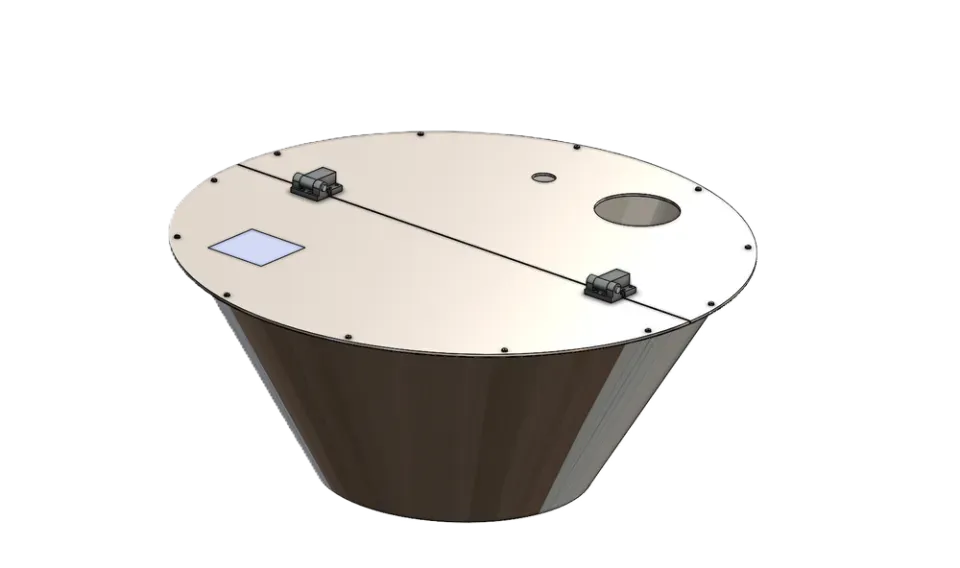
Project Status: Concept design completed. Not progressed to fabrication or implementation.
This project involved developing a redesigned hopper-cover concept for equipment operating within a high-volume food-manufacturing environment.
The existing maintenance arrangement presented several practical challenges, including exposure to falling debris, restricted access, potential pinch points and difficult working positions for maintenance personnel.
My contribution focused on understanding the maintenance problem within the operating plant, translating frontline requirements into an engineering concept and developing a practical solution that considered safety, accessibility, maintainability and integration with the existing equipment.
The project demonstrates an important aspect of my engineering approach: solving the operational problem around the equipment rather than treating the component itself as the entire project.
Project Context
Maintenance activities around the hopper required personnel to work within a constrained industrial environment.
The existing arrangement created several issues that needed to be considered together:
- Falling material and debris
- Restricted maintenance access
- Potential pinch-point exposure
- Difficult working positions
- Existing plant and equipment constraints
- Production requirements
- Cleaning and environmental conditions
- Need for efficient servicing
The challenge was therefore not simply to produce a replacement cover.
The engineering requirement was to improve protection and accessibility while ensuring that maintenance personnel could continue to reach the equipment effectively.
Understanding the Maintenance Problem
The project began with reviewing the equipment and the way maintenance activities were actually performed.
Site assessment and discussions with maintenance personnel helped establish the practical problems experienced during servicing.
This was important because maintenance issues are not always obvious from drawings alone.
Observing the equipment within its operating environment provided a clearer understanding of:
- Where personnel needed access
- Which components required regular servicing
- Where movement was restricted
- Where potential safety issues existed
- How the proposed cover could interact with surrounding equipment
These observations became inputs to the engineering design.
Requirements Definition
The operational observations were translated into practical design requirements.
The proposed solution needed to:
- Provide improved protection around the hopper
- Maintain access to serviceable components
- Allow sections to be removed when maintenance was required
- Avoid unnecessary interference with existing equipment
- Withstand the surrounding industrial environment
- Support safer maintenance activities
- Remain practical to manufacture and install
Defining these requirements before progressing the design helped maintain focus on the actual maintenance problem.
Concept Development
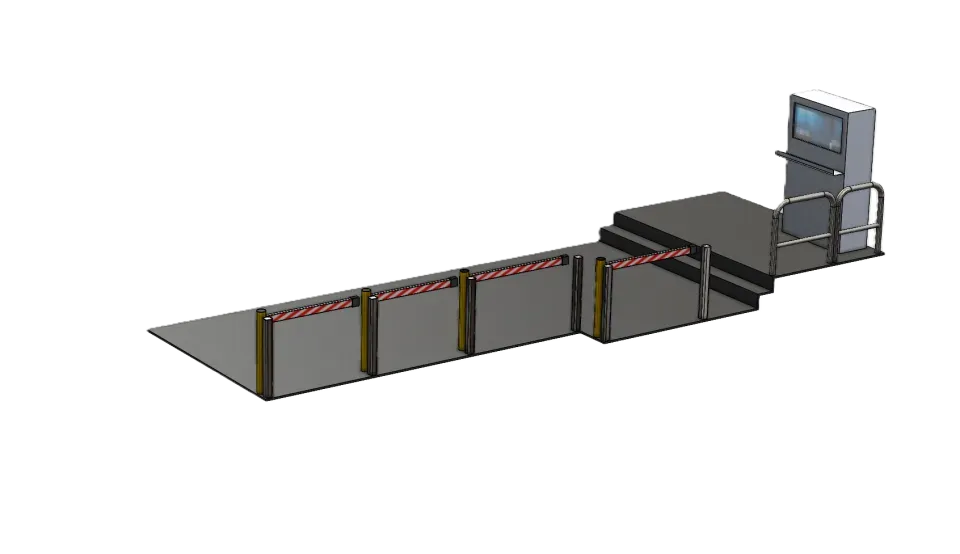
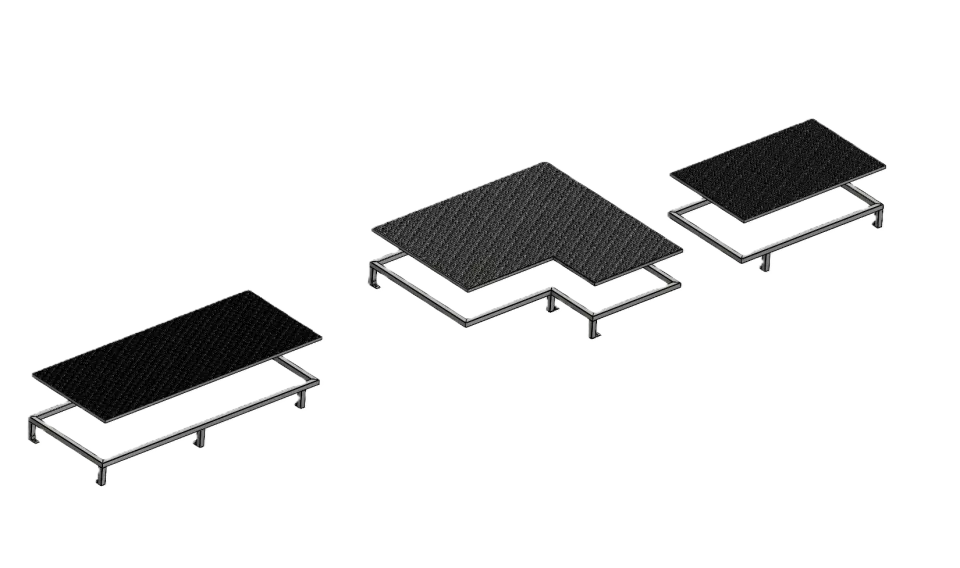
A modular hopper-cover arrangement was developed to provide protection while maintaining service access.
Rather than designing the cover as one permanent enclosure, detachable sections were incorporated into the concept.
This allowed specific areas to potentially be opened for inspection or maintenance without requiring unnecessary removal of the entire assembly.
The modular approach supported two competing requirements:
Protect the operating area during normal production while maintaining efficient access when maintenance is required.
This balance between safety and maintainability became one of the key engineering considerations within the project.
3D CAD Development
The proposed solution was developed using 3D CAD modelling.
Three-dimensional development allowed the hopper, surrounding equipment and proposed cover arrangement to be considered together.
This supported evaluation of:
- Equipment clearances
- Maintenance-access zones
- Removal of cover sections
- Interaction with surrounding infrastructure
- Overall geometry
- Potential interference points
Developing the concept digitally provided an opportunity to identify spatial issues before any potential fabrication activity.
The CAD model also provided a clear visual reference for discussing the proposed arrangement with project stakeholders.
Safety by Design
Safety was treated as an engineering input rather than something to be added after the equipment had been designed.
The concept considered physical protection, maintenance accessibility and potential interaction between personnel and operating machinery.
Provision for safety interlocking was also considered so that opening or removing designated protection could potentially interface with machine shutdown controls.
As the project remained at concept stage, these controls would have required further detailed engineering, risk assessment and validation before implementation.
This distinction is important because the project demonstrated the development of a safety concept, rather than installation or commissioning of a completed safety system.
Maintainability
One of the strongest lessons from this project was the importance of maintainability within engineering design.
Equipment can perform its production function effectively while still creating unnecessary difficulty for the people required to inspect, clean or repair it.
The redesigned concept therefore considered maintenance activities throughout development.
Detachable sections and improved access arrangements were intended to make servicing more practical while maintaining protection during normal operation.
This approach reflects a broader engineering principle I continue to apply:
Design equipment not only for how it operates, but also for how it will be maintained throughout its lifecycle.
Material and Environmental Considerations
The hopper-cover concept also needed to operate within a demanding manufacturing environment.
Material selection and construction concepts therefore considered exposure to factors such as:
- Dust and debris
- Moisture
- Cleaning activities
- Vibration
- Repeated maintenance access
Durability and corrosion resistance were important considerations when developing the proposed solution.
Material selection was therefore treated as part of the operational requirement rather than purely a manufacturing decision.
Plant Integration
The proposed design needed to fit around existing equipment rather than being developed for a new-build environment.
This introduced additional constraints.
Existing machinery, available space, maintenance pathways and production activities influenced the available design envelope.
The concept was therefore developed around the existing plant.
This type of brownfield engineering requires a different approach from designing new equipment without surrounding constraints.
The engineering solution has to respect what is already installed while still achieving the required improvement.
Stakeholder Coordination
Maintenance personnel provided an important operational perspective because they understood the practical limitations of the existing arrangement.
MNA Solutions provided the broader project interface.
The design process therefore involved translating operational observations and stakeholder requirements into an engineering concept that could be reviewed and developed further.
This reinforced another important aspect of engineering project delivery:
The people who operate and maintain equipment often hold critical information required to develop an effective engineering solution.
Project Deliverables
The project produced a concept-level engineering package incorporating:
- Site and equipment assessment
- Maintenance requirement review
- Identification of access and safety constraints
- Modular hopper-cover concept
- 3D CAD development
- Removable maintenance-access sections
- Material and environmental considerations
- Plant-integration assessment
- Safety-interlocking concept considerations
- Stakeholder review information
- Engineering design documentation
The project remained at concept stage and did not proceed into detailed implementation, fabrication, installation or commissioning.
Project Outcome
The project established a practical engineering concept for improving protection and maintenance access around the hopper equipment.
The concept demonstrated how relatively focused equipment modifications can require consideration of multiple engineering factors including safety, ergonomics, access, material selection, maintainability and integration with an existing manufacturing plant.
Although the project was not progressed to implementation, it provided valuable engineering experience in translating a frontline operational problem into a structured technical solution.
Capabilities Demonstrated
Engineering Problem Definition
Understanding the operational issue before developing the technical solution.
Mechanical Design
Developing a practical equipment modification around defined operational requirements.
Maintenance Engineering
Designing around inspection, access, removal and servicing requirements.
Safety by Design
Considering hazards and protective measures during concept development.
3D CAD and Spatial Coordination
Using three-dimensional modelling to assess equipment integration, access and clearances.
Brownfield Plant Engineering
Developing modifications around existing equipment and operational constraints.
Design for Manufacture
Considering construction, material selection and modularity when developing the concept.
Stakeholder Engagement
Using maintenance and project stakeholder input to inform engineering decisions.
Requirements Management
Converting operational concerns into defined engineering requirements.
Engineering Project Development
Progressing an operational issue through investigation, requirements definition, concept development, design review and documentation.
Career Development
This project helped strengthen the transition in my career from producing technical drawings toward solving operational engineering problems.
The CAD model was only one part of the work.
The broader engineering task was to understand why the existing arrangement created difficulty, speak with the people maintaining the equipment, identify constraints, define requirements and develop a solution that considered safety, accessibility, durability and plant integration.
That approach has continued to develop throughout my later manufacturing, operations excellence and project-delivery experience.
My technical design background enables me to understand equipment and manufacturing detail.
My later project-management and operations experience has expanded that perspective to include the complete delivery environment:
Problem → Requirements → Stakeholders → Design → Risk → Manufacture → Installation → Commissioning → Handover
The Hopper Cover project sits toward the earlier part of that professional progression, but it demonstrates the engineering problem-solving foundation on which my broader project-delivery capability has been built.