Organisation: Orica
Industry: Mining / Mobile Manufacturing Equipment
Project Period: 2011–2012
Project Type: Mobile manufacturing unit design and engineering modification
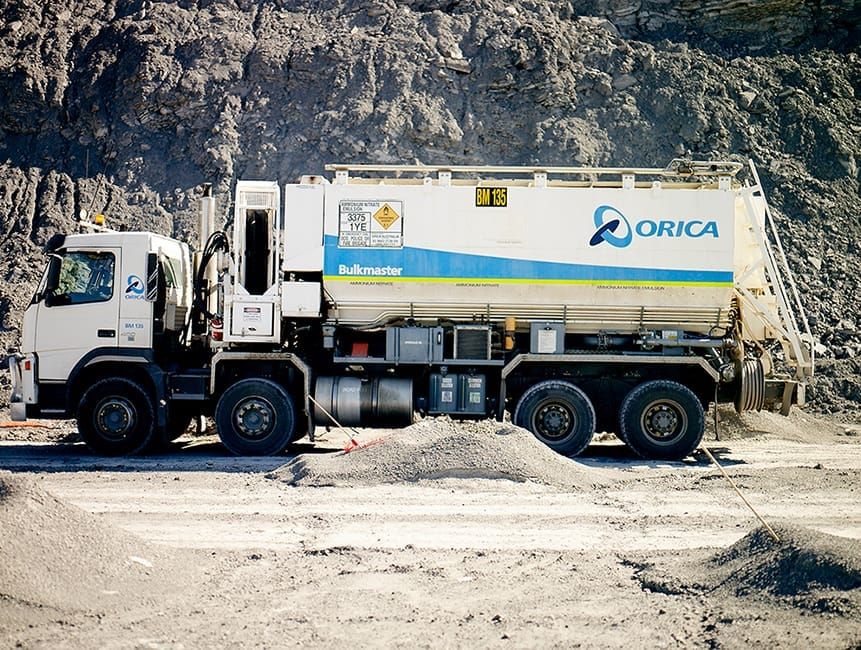
This project involved engineering design and modification work associated with Orica’s Bulk Master mobile manufacturing equipment used within mining operations.
The vehicle combined a heavy mobile platform with multiple mechanical, storage, transfer and process systems that needed to operate together within a constrained truck envelope.
My contribution included mechanical design and drafting associated with truck modifications, including fuel-tank arrangements, hose-reel systems, chemical pipework, chassis-related components and associated equipment integration.
The project provided valuable experience in mobile industrial-equipment engineering, where mechanical design decisions needed to consider not only individual components but also vehicle space, weight, structural interfaces, manufacturing, maintenance, operator access and the interactions between multiple systems.
Project Context
Mobile manufacturing equipment creates a different engineering challenge from stationary plant.
Every system needs to fit within a limited vehicle envelope while also considering vehicle weight, structural support, access, maintenance and mine-site operating conditions.
The Bulk Master platform combined several interconnected systems within one vehicle.
Engineering changes therefore needed to consider interactions between:
- Vehicle structure
- Storage systems
- Tanks
- Pipework
- Hose-handling equipment
- Mechanical supports
- Operator-access areas
- Control equipment
- Maintenance access
- Vehicle packaging
- Manufacturing requirements
Changing one part of the vehicle could potentially affect several others.
This made systems integration a central part of the design process.
Understanding the Complete Vehicle
One of the most valuable aspects of this project was learning to view the truck as an integrated engineering system.
A component cannot simply be positioned wherever sufficient space appears to exist.
Its position can affect:
- Vehicle weight distribution
- Structural loading
- Access
- Pipe routing
- Hose routing
- Maintenance
- Adjacent components
- Fabrication
- Assembly
- Operator movement
This required a broader design perspective than individual component modelling.
The engineering question became:
How does this component function as part of the complete mobile manufacturing unit?
That systems-level thinking became increasingly important throughout my later product, manufacturing and project work.
Chassis and Structural Integration
The vehicle structure provided the foundation for the process equipment mounted on the truck.
Mechanical equipment, tanks and associated systems therefore needed to interface correctly with the supporting chassis and structural framework.
Engineering considerations included:
- Equipment mounting
- Structural interfaces
- Available space
- Fabrication requirements
- Access for assembly
- Serviceability
- Interaction with surrounding systems
The existing KEVOS project record also describes a shift toward more engineered sheet-metal profiles within the redesigned platform, with the objective of reducing unnecessary structural mass while maintaining the required functionality.
For my portfolio, this is best presented as experience with structural and sheet-metal optimisation within a mobile equipment platform, rather than claiming sole responsibility for the complete vehicle structure.
Fuel Tank Design and Integration
Fuel-tank arrangements formed part of my mechanical design work associated with the truck.
Tank integration required more than defining the tank geometry.
The design also needed to consider:
- Available vehicle space
- Mounting
- Structural support
- Surrounding equipment
- Filling and servicing access
- Pipe and connection interfaces
- Manufacturing
- Installation
This type of work helped strengthen my understanding of packaged mechanical systems, where the component geometry and the installation environment need to be developed together.
Hose-Reel Systems
Hose-reel arrangements also formed part of the vehicle modifications.
The engineering challenge involved integrating the reel and associated equipment into an already constrained mobile platform while maintaining practical operator access.
Design considerations included:
- Reel position
- Supporting structure
- Hose deployment
- Retrieval
- Operator access
- Clearance
- Adjacent equipment
- Serviceability
This reinforced the importance of considering how operators physically interact with equipment.
A mechanically correct design can still be ineffective if routine operation becomes unnecessarily difficult.
Process Pipework
Chemical and process pipework also needed to be integrated into the vehicle arrangement.
Routing within mobile equipment introduces significant packaging constraints because pipes need to coexist with tanks, structures, mechanical components and maintenance access.
The pipework arrangement therefore required consideration of:
- Routing
- Connections
- Equipment interfaces
- Supporting arrangements
- Clearances
- Accessibility
- Maintenance
- Vehicle packaging
This was valuable systems-integration experience because pipework could not be developed independently of the surrounding mechanical design.
Equipment Packaging
Packaging is one of the defining challenges of mobile-equipment design.
Stationary plant can sometimes accommodate changes by extending the available footprint.
A vehicle cannot.
Width, height, overall geometry and available chassis space place clear boundaries around the design.
The Bulk Master project therefore required careful use of available volume.
Multiple systems had to coexist within the same vehicle:
Structure + Tanks + Pipework + Hose Systems + Controls + Operator Access + Maintenance Access
This experience helped develop my ability to work within strict physical constraints.
Weight-Conscious Design
Weight is particularly important on mobile equipment.
Every additional structural member, bracket, tank, enclosure and system contributes to total vehicle mass.
Engineering decisions therefore need to consider whether material is providing necessary functionality or simply adding complexity and weight.
The project strengthened my understanding of the relationship between:
Strength + Weight + Manufacturing + Function
This thinking later became valuable in product design and manufacturing improvement, where material utilisation and component complexity directly influence cost and production performance.
Sheet-Metal Engineering
The redesigned platform included increased use of engineered sheet-metal components and profiles.
Sheet metal can provide significant design flexibility when used appropriately.
Features can be incorporated through:
- Bending
- Forming
- Cut-outs
- Tabs
- Mounting features
- Reinforcement
- Integrated brackets
This can allow multiple functions to be incorporated into fewer components.
The approach supported another important design principle:
Simplify assemblies where practical by allowing the component geometry itself to perform more of the required function.
This principle remained highly relevant throughout my later product-development work.
Design for Manufacture
Vehicle components ultimately needed to be manufactured, assembled and installed.
Design decisions therefore needed to consider real fabrication processes.
Depending on the component, this included:
- Sheet-metal cutting
- Folding
- Welding
- Machining
- Standard sections
- Purchased components
- Fasteners
- Assembly
- Installation
Understanding manufacturing capability helped ensure that drawings represented practical components rather than geometry that was unnecessarily difficult or expensive to produce.
This was another important step in my development from drafting toward manufacturing-oriented engineering.
System Interfaces
One of the strongest lessons from this project was the importance of interfaces.
Engineering problems often occur not within an individual component but where two systems meet.
On a mobile manufacturing unit, these interfaces can include:
Tank ↔ Structure
Pipework ↔ Tank
Hose Reel ↔ Pipework
Equipment ↔ Chassis
Operator ↔ Equipment
Vehicle ↔ Mine-Site Operation
Each interface needs to be understood.
This project therefore strengthened my ability to think about the boundaries between engineering systems rather than focusing only on the systems themselves.
Maintenance and Accessibility
Maintenance requirements influenced equipment placement and design.
Mobile industrial equipment operates in demanding environments and needs to remain accessible for inspection and servicing.
Design considerations therefore included whether maintenance personnel could:
- Reach connections
- Access fasteners
- Inspect components
- Service equipment
- Remove components
- Replace wear items
This reinforced a principle that has continued through my later engineering work:
Design equipment for how it will be operated and maintained, not only for how it will be assembled.
Safety-Conscious Engineering
Mining equipment operates in an environment where engineering controls and disciplined design are especially important.
My design work needed to operate within the engineering and safety requirements defined for the wider vehicle program.
This meant considering practical issues such as:
- Secure equipment mounting
- Routing and protection of systems
- Operator access
- Equipment clearances
- Maintenance access
- Structural interfaces
- Safe integration with surrounding vehicle systems
Formal safety assessment, regulatory compliance and final engineering approval remained the responsibility of the relevant authorised project and engineering personnel.
Engineering Change
The Bulk Master Series 7 program involved development of an existing vehicle platform rather than designing an entirely unrelated machine.
This meant engineering changes needed to consider what already existed.
The process required understanding:
Existing Design → Required Improvement → Engineering Change → Updated Documentation → Manufacture
This type of engineering change management is particularly important in established products.
A modification can influence components that were not originally expected to change.
The work therefore helped strengthen my ability to consider the downstream effects of design changes.
CAD and Engineering Documentation
CAD models and technical drawings provided the link between engineering development and manufacture.
Documentation needed to clearly communicate:
- Geometry
- Dimensions
- Materials
- Fabrication requirements
- Assembly relationships
- Interfaces
- Installation information
- Design revisions
Accurate engineering documentation was particularly important because several systems needed to fit together within the final vehicle.
This reinforced my understanding that good CAD work is not simply about producing models.
It is about creating controlled engineering information that allows other people to manufacture and assemble the intended solution.
Cross-Functional Engineering Environment
Mobile-equipment development requires input from several areas.
Mechanical design needs to coordinate with manufacturing, vehicle systems, operations and other engineering disciplines.
Working in this environment exposed me to the need for design decisions to account for wider project requirements.
The project therefore contributed to my development in:
- Technical communication
- Design coordination
- Manufacturing awareness
- Engineering change
- Systems thinking
These capabilities later became increasingly important as my responsibilities moved toward broader project-delivery work.
Project Deliverables
My contribution included engineering and drafting work associated with:
- MMU truck modifications
- Fuel-tank design and integration
- Hose-reel arrangements
- Chemical and process pipework
- Chassis-related components
- Sheet-metal components
- Equipment mounting and integration
- Vehicle packaging
- Mechanical assemblies
- Manufacturing drawings
- Design revisions
- Engineering documentation
- Production and manufacturing support
The work formed part of the wider engineering development of the Bulk Master platform.
Project Outcome
The project supported development of the next generation of Orica’s Bulk Master mobile manufacturing equipment.
From my professional-development perspective, the project was significant because it exposed me to a complex engineered product containing multiple interconnected systems.
The vehicle was not simply:
a truck
or:
a tank
or:
a piping system.
It was an integrated mobile manufacturing system.
That required thinking across:
Structure + Mechanical Equipment + Tanks + Pipework + Operator Requirements + Manufacturing + Maintenance
The project helped strengthen the systems-oriented engineering approach that later became central to my work in product development, plant engineering, manufacturing improvement and operations excellence.
Capabilities Demonstrated
Mobile Equipment Engineering
Developing mechanical systems within the strict packaging and operating constraints of an industrial vehicle.
Mechanical Design
Designing components and assemblies around defined functional and manufacturing requirements.
Systems Integration
Coordinating tanks, pipework, hose-handling equipment, structural components and surrounding vehicle systems.
Sheet-Metal Design
Developing fabricated components and profiles appropriate to mobile industrial equipment.
Tank and Equipment Integration
Understanding mounting, packaging, connections and surrounding-system interfaces.
Process Pipework Integration
Coordinating pipe routes and equipment connections within a constrained vehicle environment.
Design for Manufacture
Considering fabrication, welding, sheet-metal processes, assembly and installation throughout development.
Weight-Conscious Engineering
Understanding the relationship between structural design, material utilisation and mobile equipment mass.
Maintainability
Considering inspection and servicing requirements when positioning and designing equipment.
Engineering Change Management
Developing improvements around an established equipment platform while considering downstream interfaces.
CAD and Manufacturing Documentation
Producing engineering information capable of supporting fabrication and assembly.
Cross-Functional Engineering
Working within a larger engineering environment where different systems and disciplines needed to coordinate.
Career Development
The Bulk Master project represents one of the important technical foundations of my career.
My earlier toolmaking and manufacturing background had taught me how individual components are physically produced.
The Bulk Master work significantly broadened that perspective.
The engineering problem became:
How do many different systems work together within one complex product?
I needed to consider:
- Structure
- Tanks
- Pipework
- Equipment
- Packaging
- Operators
- Manufacturing
- Maintenance
- Engineering changes
That was an important shift from component-level engineering toward systems-level engineering.
The progression in my career can be seen as:
Tooling → Components → Assemblies → Machines → Mobile Systems → Manufacturing Systems → Engineering Projects
Today, my responsibilities increasingly focus on the complete delivery environment:
Requirement → Scope → Stakeholders → Engineering → Contractors → Cost → Implementation → Commissioning → Handover
However, projects such as the Bulk Master Series 7 remain important because they provide the technical foundation behind that project-delivery capability.
They allow me to understand both levels of an engineering project:
the management decisions being made at project level and the physical engineering consequences those decisions create at equipment level.