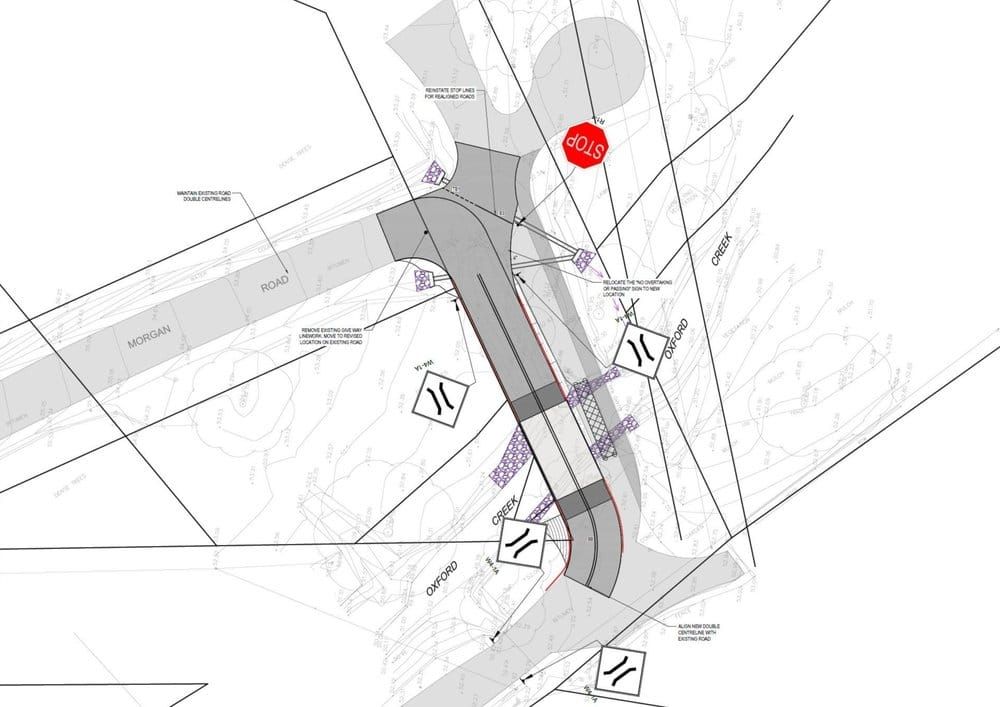
Project Interface: EPTEC
Sector: Transport / Government Infrastructure
Location: Alexandria, NSW
Project Scope: Civil drafting and bridge-repair documentation
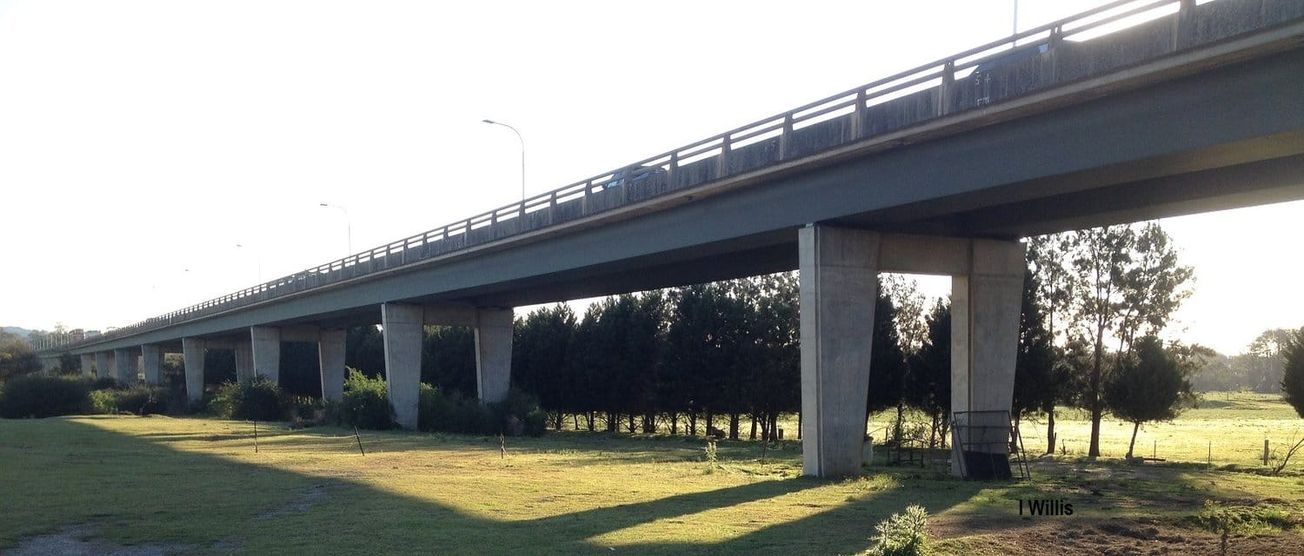
This project involved supporting the rehabilitation of an existing bridge in Alexandria, NSW through the preparation and coordination of technical documentation for concrete and reinforcement repair works.
The project required existing bridge conditions and engineering repair requirements to be translated into clear, controlled drawings that could support review and site implementation.
My contribution focused on civil drafting, concrete-repair documentation, reinforcement-repair details and coordination of technical information within the documentation requirements of a government infrastructure environment.
The project provided valuable experience in working with existing civil assets where accuracy, traceability and clarity of documentation are critical to successful project delivery.
Project Context
Infrastructure rehabilitation differs significantly from new-build design.
In a new project, the engineering team defines what will be constructed.
In rehabilitation work, the starting point is an existing structure with its own history, geometry, deterioration and constraints.
The first challenge is therefore understanding:
What exists now?
before determining:
What needs to change?
For the Alexandria Bridge project, repair documentation needed to represent the relationship between the existing concrete structure, identified deterioration and the proposed repair work.
This required careful interpretation of engineering and site information.
Existing Structure and Repair Requirements
The bridge already existed and remained the primary reference for all documentation.
Repair information therefore needed to be developed around the actual structure rather than an idealised model.
The documentation process considered:
- Existing structural geometry
- Concrete repair locations
- Reinforcement repair requirements
- Repair extents
- Technical notes
- Dimensions and references
- Relationships between affected areas
- Requirements provided by the engineering team
This reinforced the importance of reliable existing-condition information when working on brownfield or rehabilitation projects.
Concrete Repair Documentation
Concrete-repair areas needed to be represented clearly within the project drawings.
The documentation had to allow the project team to identify where repair work was required and understand how the repair area related to the bridge structure.
Clear graphical information was therefore important.
Repair documentation needed to communicate:
- Location
- Extent
- Structural reference
- Relevant dimensions
- Repair designation
- Supporting notes
This information formed part of the connection between engineering assessment and site execution.
Reinforcement Repair Detailing
Concrete deterioration can also expose or affect reinforcement.
The project therefore included documentation associated with reinforcement repair requirements.
My role centred on representing the engineering repair information accurately within the drawing package.
This required attention to how reinforcement-related details connected with the corresponding concrete repair areas.
The objective was to ensure that the documentation clearly communicated the intended engineering solution without ambiguity.
Responsibility for structural assessment, engineering design verification and certification remained with the appropriately qualified engineering professionals.
Translating Engineering Information into Drawings
One of the key responsibilities in technical drafting is converting engineering instructions into information that can be understood and used by others.
This sounds straightforward, but infrastructure rehabilitation often contains significant detail.
A repair instruction may involve:
- Existing geometry
- Damaged material
- Structural reinforcement
- Repair boundaries
- Construction sequencing
- Technical notes
- Engineering references
These elements need to be represented consistently.
The drafting process therefore required both technical understanding and disciplined information management.
Government Infrastructure Documentation
The project operated within a NSW government infrastructure documentation environment.
This required drawing information to follow established project procedures and documentation expectations.
The work therefore reinforced the importance of:
- Drawing standards
- Document consistency
- Clear technical notation
- Revision identification
- Traceability
- Review processes
- Controlled issue of information
These requirements are particularly important on infrastructure projects because drawings may be used by numerous stakeholders over the project lifecycle.
Drawing and Revision Control
Repair documentation can change as additional information becomes available.
A condition identified during initial assessment may be better understood once access is available or repair work begins.
This means drawing revision control becomes particularly important.
The project strengthened my experience in maintaining coordinated technical documentation as information evolved.
This involved ensuring that changes were reflected consistently across relevant drawings rather than treating each drawing as an independent document.
Effective document control helps reduce the risk of:
- Outdated drawings being used on site
- Conflicting information
- Duplicate work
- Misinterpretation
- Rework
These principles later became directly transferable to my mechanical, manufacturing and product-development projects.
Technical Accuracy
Accuracy was especially important because the drawings related to an existing physical asset.
The documentation needed to provide a reliable representation of the engineering information available for the repair work.
Attention was therefore required around:
- Dimensions
- Structural references
- Repair locations
- Drawing relationships
- Notes
- Detail identification
- Revision status
This reinforced the principle that technical drawings are not simply visual presentations.
They are controlled engineering information.
Engineering and Site Interface
Repair projects create a constant interface between engineering information and physical site conditions.
Engineering defines what needs to occur, but site conditions ultimately determine where and how the work is executed.
The documentation therefore needed to support communication between these two environments.
The information flow can be viewed as:
Site Condition → Engineering Assessment → Repair Requirement → Technical Drawing → Site Execution
My contribution sat primarily within the technical-documentation part of this process.
Understanding the complete chain, however, helped develop a broader appreciation of how engineering information supports project delivery.
Compliance Support
The documentation needed to align with the project procedures and applicable infrastructure documentation requirements.
My role was to support compliance through accurate drafting and controlled documentation rather than acting as the statutory engineering approver.
This distinction is important.
Technical drafting supports compliance by ensuring that approved engineering requirements are represented correctly and consistently.
Formal engineering approval and certification remain with appropriately authorised professionals.
Stakeholder Coordination
Infrastructure documentation is used by different groups for different purposes.
The project environment could include:
- Engineering personnel
- EPTEC project teams
- Site supervisors
- Repair contractors
- Client representatives
- Quality personnel
Each stakeholder needed reliable information appropriate to their part of the project.
The drawings therefore acted as a common technical communication tool.
This experience reinforced an important principle that has remained central throughout my career:
Good engineering information creates alignment between people who may have very different responsibilities.
Quality Assurance Support
Technical documentation also contributes to project quality.
Clear repair drawings establish what work has been identified and how the intended engineering response is represented.
This provides a basis for checking project information and maintaining appropriate records.
My contribution therefore supported the wider project quality process through accurate and controlled documentation.
I would describe this as quality-assurance support, rather than claiming responsibility for the complete project quality system.
Project Deliverables
My project contribution included work associated with:
- Civil CAD drafting
- Existing-condition interpretation
- Concrete-repair drawings
- Reinforcement-repair details
- Repair-location documentation
- Accurate representation drawings
- Technical notes and references
- Drawing coordination
- Documentation revisions
- Government-project documentation requirements
- Information supporting engineering and site teams
Structural assessment, repair-design approval, site construction and statutory engineering certification remained the responsibility of the appropriate engineering and project personnel.
Project Outcome
The work resulted in a coordinated technical drawing package supporting concrete and reinforcement repair activities on the existing bridge.
The project strengthened my understanding of how engineering documentation functions within major infrastructure work.
Its value to my career was not simply learning another drafting discipline.
It reinforced the relationship between:
Existing Condition → Engineering Requirement → Documentation → Construction Activity
and demonstrated why accuracy and documentation control are critical when engineering work needs to be translated into physical site activity.
Capabilities Demonstrated
Civil Infrastructure Drafting
Developing technical documentation for rehabilitation of an existing transport asset.
Concrete Repair Documentation
Representing identified repair areas clearly within controlled engineering drawings.
Reinforcement Detailing
Incorporating reinforcement-repair information into coordinated technical documentation.
Existing-Condition Interpretation
Understanding how engineering modifications relate to an established physical asset.
Technical Documentation
Converting engineering requirements into clear information capable of supporting project execution.
Government Project Documentation
Working within structured documentation and review requirements associated with public infrastructure projects.
Revision and Drawing Control
Managing changes while maintaining consistency and traceability across project information.
Compliance Support
Supporting project requirements through accurate representation of engineering information.
Engineering–Construction Interface
Understanding how technical information progresses from engineering assessment into site implementation.
Stakeholder Coordination
Producing documentation used across engineering, project and site teams.
Quality Assurance Support
Contributing reliable technical records to the wider project quality process.
Career Development
This project added an important infrastructure dimension to my engineering background.
My earlier work had already developed experience in mechanical and structural drafting.
Bridge rehabilitation introduced another type of engineering challenge:
working accurately with an existing asset where the real site condition determines the work required.
It also strengthened my understanding that successful project delivery depends heavily on the quality of the information connecting different stages of the project.
The progression can be expressed as:
Condition → Engineering Decision → Documentation → Execution → Verification
My role was concentrated around the documentation and coordination stages, but understanding the wider process helped develop the project-oriented thinking I use today.
The same principle now applies to my manufacturing and operations-excellence projects.
Whether the asset is a bridge, production machine or manufacturing line, the fundamental questions remain similar:
What is the current condition?
What problem needs to be solved?
What does engineering require?
How will that information be communicated?
Who needs to act on it?
How will changes be controlled?
What information is needed for implementation and handover?
This ability to connect technical detail with the broader delivery process has been an important foundation in my progression from design and drafting toward engineering project delivery and operations excellence.