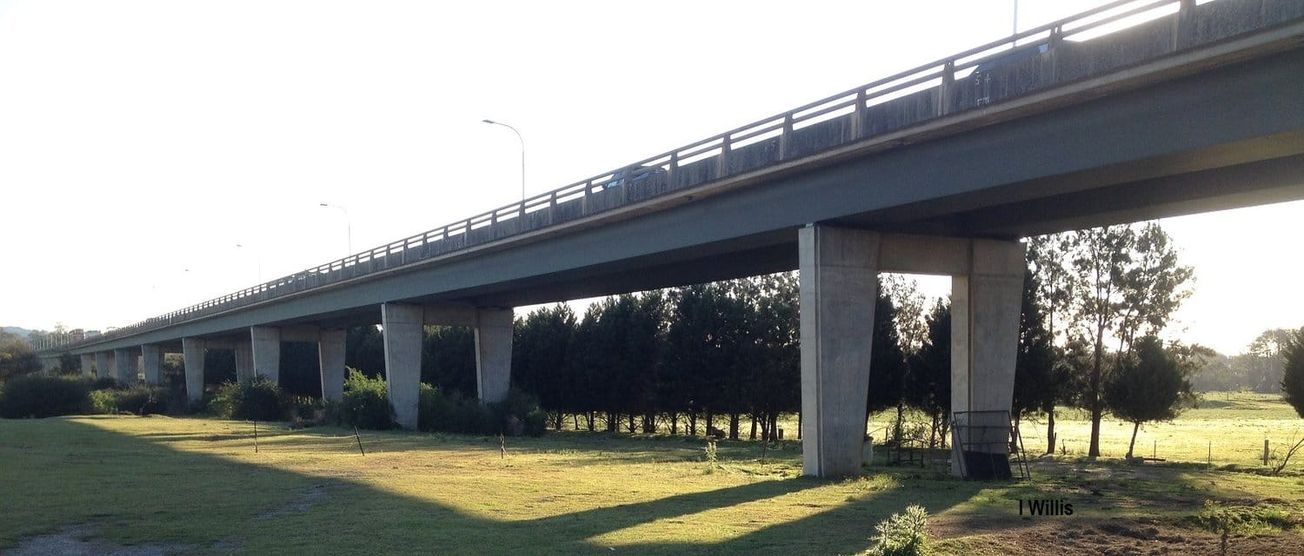
Project Interface: EPTEC
Sector: Civil / Government Infrastructure
Project Scope: Defect survey documentation and concrete repair support
This project involved supporting the rehabilitation of the Macarthur Cowpasture Bridge through the development and coordination of defect-survey and concrete-repair documentation.
The engineering challenge was not to redesign the bridge.
The requirement was to accurately capture existing defects and convert site and engineering information into clear technical documentation that could support repair planning, site execution and project closeout.
My contribution focused on translating condition information into structured engineering drawings and repair documentation, ensuring that defects, repair areas and technical information were communicated clearly between engineering and site stakeholders.
The project strengthened an important part of my professional capability: turning real-world site conditions into controlled technical information that can support safe and efficient project delivery.
Project Context
Bridge-rehabilitation projects operate differently from new-build projects.
The structure already exists, and the engineering team must first understand its current condition before determining how repairs should be planned and executed.
This creates a strong dependency on accurate defect information.
Concrete deterioration, cracking, damaged areas and other repair locations need to be identified and represented clearly enough that the project team can understand:
- Where the defect is located
- What area is affected
- What type of repair is required
- How the repair relates to the surrounding structure
- What information needs to be retained for project records
If this information is incomplete or unclear, the project can be exposed to rework, delays and disagreement between engineering and site teams.
The documentation therefore played an important role in connecting condition assessment with repair execution.
Existing-Condition Documentation
The first requirement was to establish a reliable record of the bridge areas requiring attention.
Existing-condition and defect information needed to be transferred into controlled drawings.
This involved understanding the structural location of each repair area and presenting the information in a format that could be interpreted consistently by project stakeholders.
Accuracy was particularly important.
A defect shown in the wrong position or with unclear dimensions could result in confusion during repair activities.
The documentation therefore needed to function as more than a visual representation.
It needed to provide a dependable reference for the project team.
Defect Mapping
Defect mapping formed a central part of the work.
Observed or recorded bridge defects were translated into technical drawings identifying affected locations and repair zones.
The documentation needed to communicate information such as:
- Structural location
- Relative position
- Defect extent
- Repair boundaries
- Relevant dimensions
- Reference notes
- Drawing relationships
This process required careful interpretation of site information and disciplined drawing control.
The objective was to create documentation that enabled site personnel and engineering stakeholders to work from the same technical reference.
Concrete Repair Documentation
Repair information was incorporated into the drawing and documentation package to support planned rehabilitation activities.
This required the defect information and repair intent to remain aligned.
A useful repair drawing needs to answer two separate questions:
What is wrong?
and
What needs to be done about it?
Keeping those two elements coordinated was important because changes to the identified defect condition could affect the corresponding repair requirements.
The documentation therefore became part of the wider repair-management process rather than simply a drafting output.
Engineering and Site Coordination
Infrastructure rehabilitation requires continuous interaction between technical information and what is actually found on site.
Conditions discovered during repair activities can sometimes differ from the initial information available during planning.
This makes communication between engineering and site teams particularly important.
The project required technical information to be structured so that it could support these discussions and be updated where necessary.
This strengthened my understanding of the relationship between:
Site Condition → Engineering Assessment → Documentation → Repair Activity → Verification
Each stage depends on reliable information from the previous one.
Drawing Control
Drawing control was an important aspect of the project.
Repair projects can involve multiple revisions as additional information becomes available.
Without disciplined document control, site teams can easily work from outdated information.
The documentation therefore needed to be developed and maintained in a structured manner.
This included consideration of:
- Drawing identification
- Revision management
- Clear repair references
- Consistency between drawings
- Updated information
- Project records
These principles later became increasingly relevant in my product-development, manufacturing and engineering-project work.
Regardless of industry, controlled technical information is essential when multiple people are contributing to the same project.
Infrastructure Compliance Environment
The project was undertaken within a government infrastructure environment where technical documentation and project records needed to support established quality and compliance expectations.
This required a disciplined approach to drawing preparation and documentation.
Rather than making independent claims of statutory compliance, my role is best represented as ensuring that the drafting and technical documentation aligned with the engineering and project requirements provided for the work.
This distinction accurately reflects the difference between producing project documentation and carrying responsibility for engineering certification or statutory approval.
Repair Execution Support
Technical drawings needed to be usable by the people performing or coordinating repair activities.
This required consideration of how information would be interpreted in the field.
Documentation therefore needed to be:
- Clear
- Dimensionally consistent
- Easy to reference
- Coordinated with repair locations
- Suitable for revision
- Traceable as the project progressed
This practical focus reinforced a key principle of technical documentation:
A drawing is valuable only when the next person in the delivery chain can use it confidently.
Project Closeout Documentation
Infrastructure rehabilitation does not end when the physical repair is complete.
Project records also need to document what work was undertaken.
The documentation package therefore supported the wider closeout process by maintaining a traceable record of identified defects and corresponding repair information.
Closeout documentation can be important for:
- Client records
- Future maintenance
- Quality assurance
- Audit requirements
- Asset history
- Future engineering review
This aspect of the project provided useful exposure to the full documentation lifecycle rather than only initial design drafting.
Quality and Technical Accuracy
Quality in this project depended heavily on documentation accuracy.
Unlike conceptual-design projects, where geometry may still evolve, repair drawings relate directly to an existing physical asset.
There is less tolerance for ambiguity.
The work therefore required careful attention to:
- Dimensions
- Location references
- Repair boundaries
- Drawing notes
- Revision consistency
- Technical clarity
This disciplined approach to documentation has remained important throughout my later engineering work.
Stakeholder Coordination
The project involved interaction between engineering and site-based project requirements.
Different stakeholders used the documentation for different purposes.
Engineers required accurate technical information.
Site teams needed clear repair locations and instructions.
Project managers needed controlled records.
The client required confidence that the work could be documented and closed appropriately.
My role in the documentation process helped connect these different requirements.
This provided valuable experience in understanding that engineering deliverables are often communication tools shared across several functional groups.
Project Deliverables
The work included:
- Existing-condition documentation
- Bridge-defect mapping
- Defect survey drawings
- Concrete repair drawings
- Repair-zone identification
- Drawing updates and revisions
- Coordination of engineering and site information
- Technical documentation supporting construction activities
- Documentation supporting project closeout and asset records
Engineering assessment, structural certification and approval responsibility remained with the appropriately authorised engineering and project stakeholders.
Project Outcome
The project produced a structured technical record supporting the concrete-repair activities on the Macarthur Cowpasture Bridge.
From a professional-development perspective, the project strengthened my experience in infrastructure maintenance and rehabilitation, particularly the relationship between field conditions, technical documentation and project execution.
The most important lesson was that engineering project delivery depends heavily on accurate information.
A technically sound repair strategy can still experience difficulty if the site documentation is unclear, inconsistent or poorly controlled.
The project therefore strengthened my capability in an area that has remained important throughout my career:
converting technical and operational information into documentation that enables other people to execute work effectively.
Capabilities Demonstrated
Infrastructure Rehabilitation
Understanding the documentation requirements associated with repair of an existing civil asset.
Defect Mapping
Translating condition and defect information into structured technical drawings.
Civil and Structural Drafting
Developing engineering documentation around existing structural conditions and proposed repair areas.
Technical Documentation
Producing information capable of supporting engineering review and site execution.
Drawing and Revision Control
Maintaining consistency and traceability as project information changed.
Repair Coordination
Connecting defect information with corresponding repair requirements.
Quality Assurance Support
Providing controlled technical information that contributes to project quality and closeout records.
Stakeholder Coordination
Supporting information exchange between engineering, site and project stakeholders.
Site-to-Engineering Translation
Converting physical site conditions into clear technical information.
Project Closeout
Supporting documentation needed to create a reliable record of completed infrastructure work.
Career Development
This project is significant because it added another dimension to my engineering background.
Much of my earlier experience centred on mechanical equipment, product design and manufacturing.
Bridge-rehabilitation work required a different mindset.
The engineering process began with an existing asset and a real physical condition that had to be understood, recorded and repaired.
The workflow can be viewed as:
Inspect / Identify → Document → Assess → Define Repair → Execute → Verify → Close Out
My role was concentrated around the documentation and coordination stages of this process.
That experience strengthened skills that later became highly transferable to manufacturing and operations-excellence projects.
For example, the same fundamental process applies when dealing with industrial equipment:
Identify Problem → Capture Condition → Define Requirement → Develop Solution → Implement → Verify → Handover
The technical discipline may change, but the project-delivery principles remain similar.
This project therefore contributed to my progression from detailed drafting toward a broader understanding of how technical information, site conditions, stakeholders and project controls need to work together to deliver a successful engineering outcome.